In What A Body Remembers, Karen Stefano creates a horrifying page turner, all the more horrifying because it is true, honest, and vulnerable. What resonates in the reader’s mind is the lasting effects of gender and other power dynamics in their myriad configurations. Karen takes us into that thin, raw place that no woman (or man) wants to be forced to go—the night she went from Karen to “victim”—and the aftermath of a life transformed. While some might consider her lucky, this story is both timely and able to address so much more than just assault of the body. Together, old and new Karen converge in a growing understanding of her assailant, and herself, and the ways in which their lives intersected and were changed forever.
Nancy Stohlman: So I have to admit that I waited until I felt like I was emotionally ready before I read this book. But what I discovered was not the graphic horror I had anticipated but a different kind of frightening vulnerability, something I could relate to even though I (thankfully) haven’t experienced an event like this. Was the writing of this book difficult or liberating? Did it come out in one gush or small steps?
Karen Stefano: “A different kind of frightening vulnerability” is a great way to put it. In its early pages, the book shares a horrifying assault, followed by its aftermath, and a whole lot more. But at the heart of the story is a young woman who had never given much thought to her own vulnerability—and then post-assault she can think of nothing else. Talk about a game-changer for a life’s trajectory.
But ultimately there is growth, redemption, a strength that blooms unexpectedly from that awful night—and I hope it’s that strength readers walk away with when they turn the final page.
Telling this story was incredibly difficult and, as you can imagine, quite triggering at times. It wasn’t until the book was finished that I felt any sense of liberation. And sadly, absolutely nothing I’ve ever written has come out in a gush. This book is the product of many false starts, followed by baby steps, a lot of self-discipline, and blind faith. Writing for me is always an act of blind faith.
NS: The assault itself happens early on but the book continues to address the many fallouts of assault that follow, including fear, ridicule, judgment and shame from self, co-workers, boyfriends, parents, and even police. Do you think this is true of many people’s experience of assault?
KS: Focusing on the shame piece of this question, my response is: Sadly, I think it is. I’ve spoken to many sexual assault survivors and have read extensively on the topic. Shame, self-loathing, and self-doubt always seem to be a component of the post-assault experience, regardless of the type of assault. We burden ourselves further by blaming ourselves. “I shouldn’t have been drinking.” “I should have stopped him.” “I should have fought harder.” These are examples of post-assault self talk I have heard and read about. In my case, I blamed myself for walking home alone at night near midnight—even when I literally had no other option. Of course instead of the shame and self-blame victims experience, the real reaction should be HE SHOULDN’T HAVE FUCKING DONE THAT.
Something I’m interested in (and in fact am working on an essay on this topic as we speak) is rape culture. We’re so focused on teaching women how to avoid sexual assault—and that’s fine. But the real conversation we need to be having surrounds teaching men to not commit the sexual assault.
NS: I’m struck by the way you talk frankly about feeling “neediness” in the aftermath, and also feeling badly for that. Women are supposed to ridicule themselves for being needy—it’s part of the gender power dynamic/misogynistic game even though it’s a very real emotion that everyone feels. Your thoughts on this?
KS: Yes, I became extremely needy, and extremely ashamed for feeling that way. I wanted to be a strong, powerful woman, a woman un-phased by the trifle of the experience of having a stranger run up out of the darkness and hold a knife to my throat. Isn’t that absurd?!
I don’t know if the gender power dynamic tells women not to be needy. I haven’t really thought about that aspect. But I do know, and I talk about this in the book, that our culture tells women they are supposed to be a lot of different things, many of which conflict. We’re supposed to be beautiful (it’s a trillion dollar industry!), we’re supposed to be sexy (but not too sexy! We can’t be “sluts!”). We’re supposed to be smart, get into the best schools, take on high power jobs, all the while accepting that we will earn less than our male peers. And we’re supposed to do all of this while raising children, while being loving and compassionate and nurturing.
NS: What you are really addressing in the early years is PTSD, though at the time it didn’t have a vocabulary. I think naming and claiming language is political (in much the same way “naming” flash fiction established its legitimacy). What are your thoughts on PTSD then and now?
K: I don’t hold myself out as an authority on PTSD, but in my personal experience: it’s your body refusing to forget what your mind has worked so desperately to push down.
The American Psychiatric Association defines PTSD as a reaction to an extreme traumatic event. Psychiatrists say that when people live through trauma, memories get connected in their minds with what they saw, heard, smelled or felt at the time. Fear becomes linked to the sensations that occurred during the event. These sensations become triggers – in my case, the sound of footsteps.
As far as the role it has played in my life, it was acute in the months following my attack. Then it fell dormant for decades. Suddenly, seemingly out of the blue, it reappeared again. PTSD brings terror into everyday events: walking down the street, going for a run. It makes you feel completely out of control. It makes you feel like a crazy person. Logically you can argue why the panicked reaction makes no sense – but your body isn’t going to listen. It’s going to judge what reaction is appropriate – and that reaction is to experience terror and to demonstrate vigilance, even hyper-vigilance.
As shown in the book, my PTSD primarily manifested in two ways: a fear of the dark (a bit of a problem when you work in law enforcement and have to put on a police uniform and patrol a sprawling campus and surrounding crime ridden streets in darkness!); and a severe trigger by the sound of footsteps behind me.
NS: You have such a unique perspective, having been on three different “sides” of this incident in some capacity. How does your experience as a “victim,” a lawyer, and police aide inform your understanding of sexual assault?
KS: Primarily this three-tiered experience has made me aware of the many flaws in our criminal justice system. There have been changes in the law to enhance victim’s rights and many District Attorney’s offices have a victim liaison office. But based on my experience as both lawyer and victim, there is still room for improvement.
How do we achieve that improvement? Start with simple communication. Most victims don’t have the first clue what to expect from the system and that alone is extremely anxiety-inducing. DAs have to view themselves as advocates for victims in the system, just as criminal defense lawyers act as advocates for their clients. Simply telling a person what to expect procedurally from the system goes a long way toward helping those individuals navigate that system—whether they are victims or persons accused of crimes.
NS: I find it fascinating the way that you portray the courtroom as a place where there is “re-victimization.” For the reader, too, it feels equally as violating as the original event (not being allowed to do anything but “answer the questions,” for instance). You say: “It’s me who is on trial. I hadn’t known I would be subjected to such painful scrutiny, that I would feel so degraded, so at fault. I feel violated, helpless. Again.” I’m thinking now of public cases like Cosby and Weinstein—has there been any progress?
KS: Following up on what I said previously, there has definitely been progress but the system needs to do better—both for victims and for persons accused of crimes. The statistics on mass-incarceration and wrongly convicted defendants are staggering. In spite of my own experience as “victim,” I want to be clear that I believe cross-examination is a necessary tool. I believe in due process. I believe in holding prosecutors accountable, in making law enforcement play by the rules. But what’s so disheartening to me is the ability of wealthy, privileged, “untouchable” men like Weinstein to manipulate the criminal justice system to their advantage. The whole issue morphs into “How much justice can you afford?” My own assailant came from a wealthy family, by the way, allowing him the opportunity to hire a skilled, seasoned trial lawyer. Not everyone has those resources and the fact is that people of privilege get a better deal in our justice system. And that’s just wrong.
NS: I really love and appreciate that you have compassion, even fascination with your assailant. You become curious about him, his humanity and the way that, like it or not, we are forever linked to the people who share traumatic events with us. Do you think you have this level of empathy and compassion because of your time as a defense lawyer? Was it the chicken or the egg?
KS: There’s a flicker of compassion I suppose but in the context of appreciating all of our humanity, all of our complexities and contradictions. It’s a recognition that as humans we are inherently flawed. And to answer your question, this point of view is definitely a function of my time as a defense lawyer, of getting to know so many clients from so many backgrounds.
NS: You published this book with Rare Bird Books, and you host a podcast on Rare Bird Radio. Tell us a bit about the podcast.
KS: It’s one of my favorite things! I’ve been doing it since 2015 and I basically talk to writers about their books. Indie authors, Big 5 authors, and everything in between, covering virtually every form and genre. There are a lot of great literary podcasts out there but often I feel they go off topic. This podcast is about writing, publishing, and how we choose to tell our stories. Guests and I laugh, sometimes we cry. I’ve enjoyed every single one of them—all for different reasons. If you’ve missed them, they’re all on my web site: http://stefanokaren.com
NS: This isn’t your first book. You also published The Secret Game of Words, a very different kind of book, several years ago. What advice do you have for writers who want to write a book?
KS: My advice varies depending upon what kind of book that might be. Writing is hard. It requires vast amounts of both faith and self-discipline. You have to push yourself, force yourself to stay in the chair and finish a scene. But this becomes more delicate if you’re writing about trauma, about the ugliest parts of your own life. You have to consider: am I being self-disciplined, or am I pushing myself to the brink of emotional disaster? If you’re writing about trauma, you will likely get triggered and you need to have a plan in place to deal with this triggering. You have to have a plan in place for the emotional self care that will inevitably be required.
NS: You are the best! Thank you for being here and for doing the brave work.
Links to buy the book:
Barnes and Noble
Amazon
Indie Bound
Karen Stefano is the author of the memoir, What A Body Remembers: A Memoir of Sexual Assault and Its Aftermath (Rare Bird Books 2019). She is the author of the short story collection The Secret Games of Words (1GlimpsePress 2015) and the how-to business writing guide, Before Hitting Send (Dearborn 2011). Her work has appeared in Ms. Magazine, The Rumpus, Psychology Today, Writer’s Digest, Tampa Review, Epiphany, and elsewhere. She is also a JD/MBA with more than twenty years of complex litigation experience. To learn more about Karen and her writing, please visit http://stefanokaren.com.
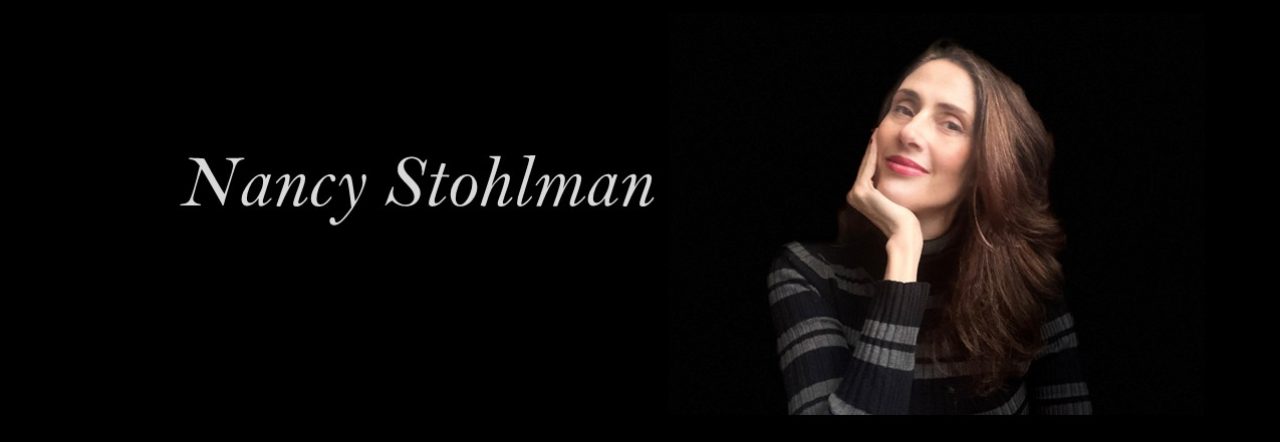


 Nancy Stohlman