Writer’s Digest Short Story Virtual Conference May 22-23

Thanks to everyone who registered for summer workshops–all workshops are now FULL, and I am looking forward to working with you all!

If you were not able to register for a workshop intensive: I will be participating in several live (Zoom) opportunities in May and June! The first one is this weekend, at the Writer’s Digest Short Story Virtual Conference:

Writer’s Digest Short Story Virtual Conference, May 21-23

Writer’s Digest is pleased to present an exclusive virtual conference for short story writers! On May 21-23, our Short Story Writing Virtual Conference will provide expert insights from SEVEN award-winning and best-selling authors on the finer points of how to write a short story. Spend the weekend learning techniques for honing your craft skills, marketing your short fiction, editing, and getting the tools you need to advance your career as a writer from seven different published authors.

Experience the education, camaraderie, and opportunities provided by a live writing conference without ever having to leave your home!

  • Marketing Short Fiction: The Science of Publishing by Jacob M. Appel
    The purpose of this session is to demystify the submission and selection process, ultimately leading to a more impressive acceptance to submission ratio.
  • Editing the Short Stuff by Windy Lynn Harris
    This session will walk you through a four-step plan to go from first draft to last with confidence.
  • Whose Story Is It Anyway?: Point of View in Short Stories by Ran Walker
    Award-winning author Ran Walker discusses the ins and outs, pros and cons, of using the various forms of point-of-view so that you can approach your next story with greater confidence.
  • How to Use Eight (vs Five) Senses in the Short Story by Jenny Bhatt
    During this session, we’ll look at practical examples from well-known short stories for how to leverage all eight senses in our own writing.
  • Going Short: Flash Fiction for the Flash-Curious by Nancy Stohlman
    In this session, veteran writer, publisher, and professor Nancy Stohlman will take you on a flash fiction journey to examine and discuss the fundamentals of flash, examine different approaches to the compressed narrative, debunk flash myths and distinguish flash fiction from its close cousins, the short story and the prose poem.
  • How to Develop an Enticing Story Premise by Rachel Swearingen
    In this session, you will learn how to use the elements of craft to discover the unique premise hiding in your material.
  • Worldbuilding and the Bi-valve Heart of the Story by Brenda Peynado
    This craft lesson will show you how to forecast the heart of the story within the first sentence or paragraph at the same time as it builds your fictional world, small or large—a family, a suburb, a spaceship, or a planet.

Info, full schedule, and registration for the conference:

***Going Short: Flash Fiction for the Flash-Curious will be held Saturday, May 22 at 3 pm EST/12 pm PST

Would love to “see” you there!
Writing Remix Podcast: Nancy Stohlman, Flash Fiction, and Going Short

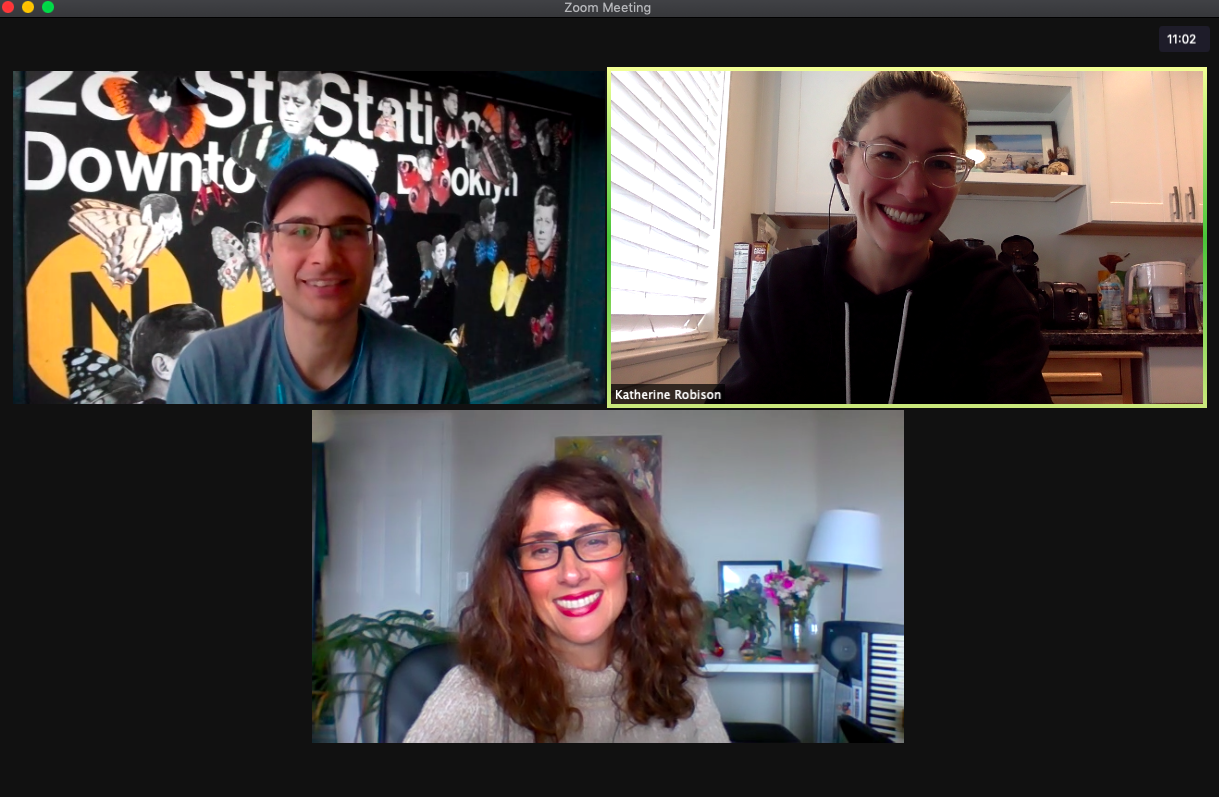
In Episode 54, we talk to writer Nancy Stohlman about her award-winning book Going Short: An Invitation to Flash Fiction, the power of flash fiction as a fully realized genre, and how to write and teach flash fiction.  

Find Going Short here!

This episode was recorded on March 15, 2021. Because we recorded via Zoom, there may be occasional audio hiccups. Our theme song is “4 am” by Makaih Beats. You can subscribe to the podcast on Apple PodcastsSpotify, and Stitcher and follow us on Twitter @WritingRemixPod

LISTEN HERE

Quotes from the Episode:

“What I really discovered, and was such a relief for me, was not every story is 60,000 words, and if you push it to try to make it cross that finish line so that you can call it a novel, then have you sold out your own idea, perhaps?” @nancystohlmanTweet

“It was so liberating for me to have permission to let my story decide how long it needed to be and not [let] conventions decide.” @nancystohlmanTweet

“Flash fiction is like when you’re at the airport and you are sitting next to somebody and they’re gonna get on a flight in 20 minutes and you’re gonna get on a flight in 20 minutes and you end up having this amazing conversation for 20 minutes. And then they go their way, and you go your way, and you never see them again. Is there anything less profound and wonderful about that 20 minute conversation versus if I was that person’s friend since childhood and knew every little thing about them?” @nancystohlmanTweet

 “This is the kernel. This is the heartbeat here. And I can give it to you in this little flash fiction piece.” @nancystohlmanTweet

“Sometimes you want to go on the whole journey. But sometimes you just want to see the heart beating and just look at it and just realize how powerful that is.” @nancystohlmanTweet

“Poetry and flash fiction, they share brevity, but they also share complexity, and they share a lot of depth. A lot goes on in these tiny little spaces.” @nancystohlmanTweet

“Flash fiction is not just a little knock-knock joke on your way to work. It’s like a whole thing that’s going to be ringing in your head for the rest of the day.” @nancystohlmanTweet

“That’s one of the things I really love about the constraint of flash fiction […] You’re playing with the form. You’re pushing against it. It’s like air inside of a balloon.” @nancystohlmanTweet

“Knowing what the edges are in any form allows me to kind of create a shape that I may not have created if I just had all the room in the world.” @nancystohlmanTweet

“Are you writing what you think other people want, or are you writing what’s really in your heart screaming to get out?” @nancystohlmanTweet

“When you start listening to your own work and seeing yourself as being in service of the story–the midwife of the story–you’re not the creator. You’re the midwife, and it’s coming through you. So get out of the way, and it will tell you when it’s done. I think if that’s where we can position ourselves as writers, I think the best work will come through that way.” @nancystohlmanTweet

“So many of the lessons that I have in the book Going Short come from years and years and years of creating context for [my] workshops.” @nancystohlmanTweet

“I think that most writers or artists in general, just kind of feed off that novelty where everything is unfamiliar and I’m suddenly actually present in my body paying attention to the world in a way that I’m not when everything is familiar…I think that’s really what I love about being a writer who travels–is just forcing myself to slow down and actually not be sure of anything and notice everything.” @nancystohlmanTweet

“I think it’s important to remember too that our creativity [is] seasonal.” @nancystohlmanTweet

“Around 2010 or so, I was like all right, well, there isn’t this book [about how to write flash fiction], and there needs to be this book, so I guess I should write this book.” @nancystohlmanTweet

“Women have helped create [flash fiction] just as much as the men.” @nancystohlmanTweet

“Learning how to finish a book is just as important as learning how to begin a book, but we don’t practice that enough.” @nancystohlmanTweet

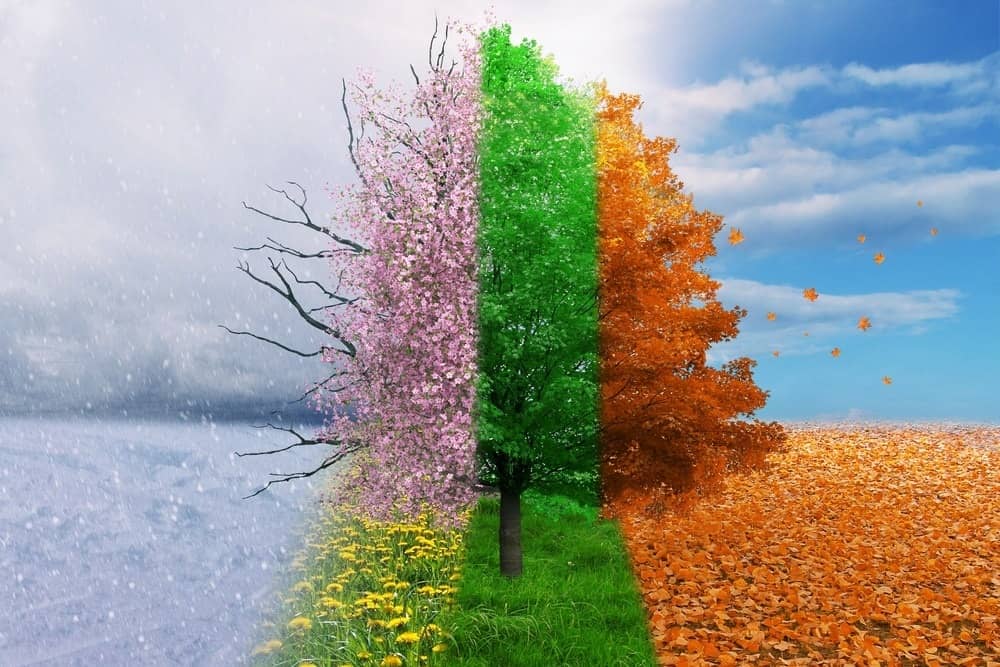
The Seasons of the Creative Process

I’ve said for years there are few things I trust more than the creative process. The sun rises, the sun sets, the tides go in and out, and the creative process ebbs and flows…and ebbs and flows again.

I share this now, at the dawn of spring, because it can be tempting to take a snapshot of the creative process rather than seeing it as a continuum. When we are deep in winter here in Colorado, I take solace knowing that the Earth inevitably turns, and winter will soon be followed by spring. And conversely, when I am deep in the luxury of summer, I try to remember that it, too, will not last. 

It can be helpful, if you plan to have a long, creative life, to view your process like this. To roll with the changing seasons of our art. Periods of furious creation are followed by a slowing down as we recuperate. And those fallow periods are followed by new sparks and new creative discoveries…if we remain patient and trust the process. The key in any season is to embrace that cycles come and go. When we are in the creative mania stages, it can be hard to remember winter is coming. And when we are fallow, we may not recognize the new seeds germinating.

The more times you go through this process, the more you will start to trust that every season will retreat…and eventually return.

This cyclical nature is especially important when you are feeling creative FOMO (fear of missing out) or artistic jealousy. Your creativity is turning, always, but so is everyone else’s…on different cycles. Someone might be doing a lot of publishing outwardly, but behind the scenes they’re fallow. Someone else may feel insecure that they haven’t published lately, but they’re writing a masterpiece behind the scenes. 

Bottom line: It’s counterproductive to compare July to January. Instead, wherever you are in your creative process, remember you are turning and spinning, facing and retreating from the sun over and over. 

If you wait long enough, it will always be summer. 

To your beautiful, flowering creativity,

xoxoxo

Nancy

P.S. Speaking of seasons…are you ready for a flash fiction retreat in Iceland’s darkness? Early access to registration opens tomorrow!

The Green-Eyed Monster: Jealousy in the Time of Quarantine: Nancy Stohlman guests on Jane Friedman

Read full article on Jane Friedman.com

An excerpt:

One good thing about a year’s worth of quarantine? A lot less FOMO. We’re less afraid of missing out because everyone is missing out. We aren’t worried about being left off the guest list because there is no guest list. And for many of us who were trying to be everything to everyone, this has been a huge relief.

But…now that our attention and focus has been narrowed even more tightly to the screen, we might be noticing a different kind of FOMO creeping up. We’re maybe noticing there are other writers doing a lot during quarantine: publishing or producing with a seemingly endless supply of creative juice, while the project you were working on was cancelled, or postponed, or just feels irrelevant now in this plague world. Maybe all your writer friends seem inspired and you’re stuck. And you feel that nasty green-eyed monster putting his hand on his hips again.

I’m going to go out on a limb and suggest that, despite our very best efforts, artistic jealousy affects us all at one time or another. If you’ve never felt the green monster, then you’re a better person than me. Mind you, I genuinely like my colleagues and I want them all to succeed. Most days I subscribe to the “we all win when we all win” mentality, and I truly believe it’s the only way to have a long, rewarding artistic life.

But… no matter who you are, there is probably somebody out there who is kicking more butt than you, and it seems to be happening effortlessly.

What to do about it???

KEEP READING HERE