Ask A Flash Fiction Editor: Size Does Matter

I’m excited to feature my old colleague, Nicholas Michael Ravnikar’s, piece in progress, “The New Addition”, for this conversation. Nicholas and I worked together on two flash fiction anthologies with Fast Forward Press, so I’m thrilled to revisit his work!
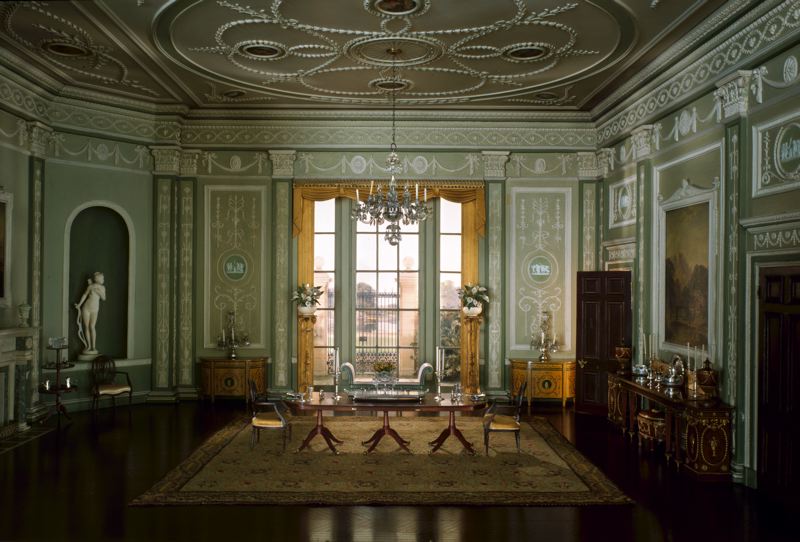
ImageOne of my favorite exhibits in the Chicago Institute of Art is the Thorne Miniature Rooms: tiny replicas of actual rooms painstakingly crafted on a scale of one inch: one foot. You press your face up to each of the 68 windows and gaze at the tiny world inside: fully formed rooms, complete with intricate period details, exotic woods, fabrics, chandeliers and hand-woven rugs. The attention to detail in each room would be fascinating even at life size, but the true fascination is the fact that they are just so damn tiny! Like painting the Mona Lisa on a grain of rice or a sculpture of Charlie Chaplin balanced on an eyelash.

So let’s go ahead and debunk flash fiction myth #1 right now: Just because it’s small doesn’t mean it’s easier. Anyone who has written poetry knows how long you can agonize over 100 words.

One of the reasons people love flash fiction is, like the Thorne rooms, there is something awe-inspiring about entering a perfectly formed little world. If it’s done correctly, the stature becomes part of the art: readers can’t believe they just had such a complete story experience in such a tiny space. It becomes more of a testament to the skills of the writer, not the other way around.

So Nicholas, let’s talk about your piece, “The New Addition” (full text below).

When I enter your piece it’s like I’m entering one of these exquisite little rooms. I’m immediately grabbed by the description of the ketchup sandwich all the way to the insect paste, and there’s an urgency that yanks me into the sentences like I’ve been kidnapped into your world. It’s so exciting. Within seconds I feel implicated in the story, as if by witnessing the action I’ve somehow participated in it. And that is really the beauty of abstract art: to invoke feelings that you couldn’t get to by more conventional ways.

But there is a lack of coherence that ends up pulling me into this exotic world and then leaves me stranded and confused. And I realize I’m in touchy territory because coherence isn’t always a goal for a writer. You are admittedly in love with language, and your world is so cleverly fragmented and infused with intrigue…but I feel like you lead us into the room and don’t lead us out.

And we’re so smitten that we almost want to forgive you for this.

But let me offer this suggestion: even if coherence wasn’t your original goal…we want so badly to understand! Because we want to stay in this world. Therefore, if you can give us both this imagery and intrigue and the satisfaction of really allowing us cognitively into the piece, it will go from beautiful to phenomenal and have a more lasting effect.

One of the ways that I think you could bring clarity to the story without sacrificing too much abstraction is to let your characters themselves be signposts: Right now the story begins with “they”, which we know includes her and someone else. Then we meet “you” narrating. Then we meet “her girlfriend” in Mexico—and we’re not sure if this is the other half of the “they” from the beginning or a fourth character. There is a “girlfriend’s drug dealer” as well as a “he’ that shows up at the end, which could be the other half of the original “they” or could be referring to the dealer. By the end of the story my brain is holding onto to all six threads trying to make them connect. But eventually I surrender and decide that in order to really get it I’m going to need to be 25% smarter.

So this is actually the flipside of what I was saying a few weeks ago about trusting the reader: Trust the reader, but leave breadcrumbs just in case.

Again, I realize that being crystal clear doesn’t have to be a goal. But the lack of coherence might be keeping readers at an unnecessary distance when you want them enmeshed, and I don’t think it wouldn’t take too many strategic clues to keep the reader fully engaged. Right now we’re being pulled out too often trying to make sense of it. But the bottom line is we want to stay in this room you’ve crafted, so throw us some crumbs and we’ll follow you, I promise.

Happy Writing!

~Nancy Stohlman

 (I welcome all comments and conversations, so join in! And feel free to find me on Facebook or contact me at nancystohlman@gmail.com)

THE NEW ADDITION

by Nicholas Michael Ravnikar

Ketchup sandwich in hand, the crest of winter, St. Patrick’s day. It’s around the time of the new addition. The wedding was last June. This is the first time since that they’ve slept apart. The sheet-plastic walls and the sawdust got to be too much for her. Then she thought of you, filled the gas tank and booked the same room. At least, she thinks it is. What a mouthful. No more of this.

Notice the sweet summer storm sort of sunset in this photograph she’s thumbing. You never gave her this one: your shirt after the plate glass lacerations, lying on a concrete Embarcadero bench. She had to dig around for a copy online—it wasn’t hard, with your public profile. She ordered a print from the Walgreens by the overpass. The blood dyes the fabric, amplifies her pulse. When did you last investigate the seams of her tendons audibly?

The telephone you left smeared with Jiffy your last night here sits beside her. She indexes your flat-naked craw, recalls how you threw the plastic salmon base cradle at her girlfriend’s dealer when you discovered them. Her loud skin, this browsing of images, and your thin grimace wondering back into her figure to arch her spine again. Slightly clad in low-thread count rough motel sham, her thighs fold over memories of you, of your calluses.

More of them are like us here.

Two blocks from Broadway, you meant. You could always appear tender.

Flamethrowers, she said.

Or else they had assault rifles.

Big difference.

Why did you have to see me first?

Then one can’t locate the other, and the latter keeps quiet. Eventually, she’ll call. Or he will, impossibly. Even if that, holding withered boundaries. And then captions run in yellow Ariel across the bottom of the flat screen: “Either the Vikings or the Raiders will kill us next year.”

You need to call babies human babies. She makes this resolution. And that helps a bit.

It’s even weirder when starlit seas compound her view of the village as she leans across the harbor, squinting. The next step of her calming calls for an insect paste smeared across the map of her features. It burns some. Then it comes: a sisterly smile. Stunning. The next morning, she drives home mumbling her five-year-old response to you: Life is never normal.

 *

Nicholas Michael Ravnikar saddles the tears of Mesoamerica with committees that bloom out the windows of his hopscotch factory. “Nine years ago, I watched a fire consume a kindergarten school desk,” he says. “We poured a makeshift absinthe on the embers. Today, I delight in more sordid fancies — for instance, skateboarding after three years at twelve in the afternoon.” With 83 texts (mostly English) in circulation at many small venues online and in print, he resides between one and twenty miles from the coast of Lake Michigan, just past the northern limns of the Illinois-Wisconsin border. Look for his haiku on Facebook.

The Homunculus

The Homunculus

 originally published in Revolver. Read original here.

After all my other birthday presents had been opened, he had one last gift for me. It was a tiny box that he held out with such a grin that I became nervous. What is it? I asked. Just open it, he says. Inside was a tiny man, about 6 inches high. He was dressed in tiny polo jeans and a tiny madras shirt with pullover sweater, and he looked very much like a tiny version of my boyfriend.

It’s a homunculus, he says. Since I have to be out of town so much for work, and I know how much you hate being alone, this will be the perfect solution! It’ll be like we’re together all the time.

But how will I take care of him?

He’s a grown man, he can take care of himself.

It was a bit awkward at first, but my boyfriend reassured me it would be fine. So I put him in the inside pocket of my purse, where I keep special things like my mirror and my flash drive. He never complained, even when I once saw him all twisted under some lipsticks and dirty from the random filth that collects at the bottom of purses.

I felt bad, so I started taking him out more often, setting him on the table at meals. He got brave enough to sit at the edge of my plate and eat with me; I didn’t have tiny utensils, so he used his hands. He was always clean, even though he wore the same clothes, all the time. When I finally asked him about it, he just said, I’m a homunculus.

We were really hitting it off, which shouldn’t be surprising. He was just like my boyfriend—except tinier. And more available. We liked all the same things, of course. I let him ride in my breast pocket on my weekend bike rides. I started taking him out of the purse when watching a movie, sitting in front of the fireplace, and eventually I let him sleep on the pillow next to me. That first night I was terrified I would roll over and crush him, but he was fine in the morning and I started to relax, and then on one of those mornings I let him go beneath my panties when we were lying there, and things happened.

That’s when I started to feel guilty—what was my boyfriend going to think? But he’s the one that said it would be like we were together all the time. The more time that passed, the more I rationalized it to myself: this was ultimately going to be good for us, me being less needy, and all. But I didn’t want to admit the truth—I was falling for the little guy.

The first night my boyfriend got back into town was strange. It felt weird to sleep next to a full sized person again, and I lay awake for the longest night of my life, feeling worried about the homunculus, who was back in my purse.

The next morning after my boyfriend had left, the homunculus climbed out of my purse and found me on the pillows. Let’s run away, I suggested. I couldn’t stand the thought of not being with him. Suddenly the whole world was full of possibility again. Then I heard my boyfriend coming up the stairs. I left my tofu by the bed, he said. He stood in the doorway as I tried to hide the homunculus. But he must have seen it in my eyes, because he yanked the pillow away and there was the homunculus, trying to disappear between the folds of the comforter. His face contorted.

You backstabber! he yelled, snatching him and running down the stairs. I followed, screaming—don’t hurt him! For god’s sake you’re crushing him!

My boyfriend ran out the front door and across the street and all the way to the top of Jackass Hill, where he wound up his arm and threw my homunculus as far as he could. I saw his tiny dot fly through the air until he disappeared into the blue sky.

Ask A Flash Fiction Editor: A Ukulele is Not a Miniature Guitar

At the Flash Fiction panel at AWP last year, Tom Hazuka said one of the things he loves about flash fiction is that it truly defies genre—with the exception of the word constraint, there are really no other “rules”. As a result, flash stories show up as letters, found texts, lists, exercises, conversations, sometimes they go backwards, sometimes they are told entirely in dialogue, or changing tenses, or different points of view, or maybe even in one long sentence. And to exemplify stories behaving differently in space spaces, I’m delighted to have Cath Barton’s piece in progress, “This Is All It Takes”, to spark the discussion. (Full story below)

Flash fiction has created a new sort of genre freedom with only one rule: tell us a story in 1000 words. I don’t care how you do it. Just make it work. So flash writers are giving themselves permission to take risks, attempting literary acrobatics that could not be accomplished (or at least as effectively) elsewhere. And what ends up happening is we begin telling stories that could not be told in any other form. 

As a flash fiction writer, that’s incredibly exciting.

I like to use the comparison of the guitar vs the ukulele: to the untrained eye, a ukulele is a miniature guitar. Having played the guitar all my life, I was initially thrilled by the simplified chords and smaller neck of the ukulele, and thought to myself, “Well, this will be so much easier!” But I quickly began to realize that, while one may just look like a shrunken version of the other, they are really two different instruments and they require two different repertoires. Songs that sound good on the guitar may not translate well to the ukulele, and the ukulele, with its distinct tuning and style, makes certain songs come to life in a way they never could on the guitar.

So with that in mind, Cath, let’s take a look at your piece, “This Is All It Takes”.

Your story is a perfect example of utilizing techniques that wouldn’t work in longer forms. For instance, your story really seems to vibrate in that second person point of view, that strange narrative voice that so mimics our primal “gut”. In addition, your attention to sentence structure, rushing the reader along your winding, breathless sentences–alternated with the shock of short and punchy bursts—and then back to the frenetic pace of words tumbling on top of one another, recreates the feeling of breathlessness and panic of running, trying to keep someone in sight, almost losing them, finding them again. You do a great job of creating syntax that really supports your story tone and message. And all of these techniques really find themselves at home in the flash form.

I have three suggestions for this piece. The first is to look at the point of entry into the story. As it stands now, we begin the story after the flash of red has already happened. The impetus for the whole story—that flash of red—happens offstage, out of sight.  As a result, we don’t connect with that glorious moment of panic/excitement/mystery—we come in later, as a spectator, after the momentum is already going. I’d like to propose that seeing the flash of red and everything that it stirs up in our character IS the game changer, here, so don’t have it happen offstage. Have it happen, here, and have it affect us in the moment as it affects the character. Because what happens now is that we are running, but always trying to “feel” why we are running.

A second suggestion is that sometimes the character’s “thinking” slows the story down. Just run—don’t think about running. See the flash of red, let it grip her gut and go. A character “thinking” about what he or she is doing—the exposition that might work in a longer piece—is often the first place to start cutting in a flash piece. In this form we must trust our reader to “get it” more, so resist the urge to explain whenever possible. Show us the flash. Run. Run with an unexplained vigor. Show us what to “do” and we will naturally feel the emotions with the character.

For example: (This is from your original)

You shake your head, very slowly, as if you’re in a film but you’re not, you’re in town on a Tuesday morning and you were just taken by the red flash of a man’s coat and now he’s there in front of you and you can’t believe, you really can’t believe that it’s him, holding out your hat to you, holding out your life to you. You were quite happy, you weren’t looking for anyone, you are, you were, completely content and now everything has changed in an instant. This is him, the one. There is no mistaking that he is the man you will now leave with, leave this market, leave this town and never come back. You won’t even stop to think, you daren’t because if you did you would remember that just a few streets away there is someone waiting for you, probably looking at his watch and thinking that you should have come home with the  bread for lunch, that it isn’t like you to take so long.

Here is it, stripped down:

You shake your head, very slowly, as if you’re in a film but you’re not, you’re in town on a Tuesday morning, and now he’s here in front of you, holding out your hat. It’s him, the one. You don’t even stop to think because if you did you would remember that just a few streets away there is someone waiting for you, probably looking at his watch and thinking that you should have come home with the bread for lunch, that it isn’t like you to take so long.

And my final suggestion is: I bet you can come up with a killer title for this piece that will really draw the reader in. I tend to think the strongest titles use striking nouns and verbs. I keep thinking Red wants to be part your title…

Cath, thanks so much for trusting me with your work and allowing us all to learn from your process! And all comments are welcome—jump into the conversation! We want to hear from you.

Happy Writing!

~Nancy Stohlman

(Questions? Email me at nancystohlman@gmail.com or find me on Facebook)

*

This Is All It Takes

by Cath Barton

You come out of the yoga class and you hesitate. Will you turn left for home or right for town, following that flash of red you just saw out of the corner of your eye? You’re thinking if in doubt say yes. You turn right. You’re a little behind as the person dodges into the market hall, you see the red cloak swirl as he goes out the back and you run.  You could trip, but you don’t, you’re sure-footed, and you’re out in the yard gazing at the bowl of the sky above your head and there’s no one there, except that out of the corner of your eye you see something against the blue, bright red on bright blue so that for a moment it’s purple and you’re off running again, and he’s running too, must be because you’re really fast but he’s faster.

You’re down the street and there are sheep in the cattle market, the acrid smell is in your nostrils. You stop, your breath coming out all jagged, because you’re not used to running so fast for so long, and you twirl around, and all you can see is sheep, and the sound of their baaing is loud and rude and somehow gets in the way of your looking.

Someone coughs behind you, really close, and you gasp and hold your breath and you daren’t turn, not for a minute.

“You dropped your hat.”

You turn. It’s him, the man in red, holding out your hat, your purple hat.  You shake your head, very slowly, as if you’re in a film but you’re not, you’re in town on a Tuesday morning and you were just taken by the red flash of a man’s coat and now he’s there in front of you and you can’t believe, you really can’t believe that it’s him, holding out your hat to you, holding out your life to you. You were quite happy, you weren’t looking for anyone, you are, you were, completely content and now everything has changed in an instant. This is him, the one. There is no mistaking that he is the man you will now leave with, leave this market, leave this town and never come back. You won’t even stop to think, you daren’t because if you did you would remember that just a few streets away there is someone waiting for you, probably looking at his watch and thinking that you should have come home with the  bread for lunch, that it isn’t like you to take so long. But he won’t worry for a while because you always do come home, always have before and why should it be different now, and that is such a pity, because by the time evening comes and he knows that all cannot be well, you will be far away. So far away that no-one will find you. You and the man in red, the one you followed, the one you were always meant to be with, you and the man will be somewhere else and that will be an end to it.

Cath Barton is an English writer, photographer and singer who lives in a small town in South Wales. Cath particularly likes writing short fiction, and has had work published in Fractured West, Short, Fast and Deadly, Vine Leaves Literary Journal and beyond. She has recently published the anthology of stories and photographs Candyfloss II in collaboration with her husband Oliver.

Cath blogs about short story writing at www.cathbarton.wordpress.com and posts her daily photographic journal at www.blipfoto.com/Cathaber.