FlashNano Starts Tomorrow!
Take your places, everyone!

Follow our progress and see all the prompts here:

Follow our progress and see all the prompts here:
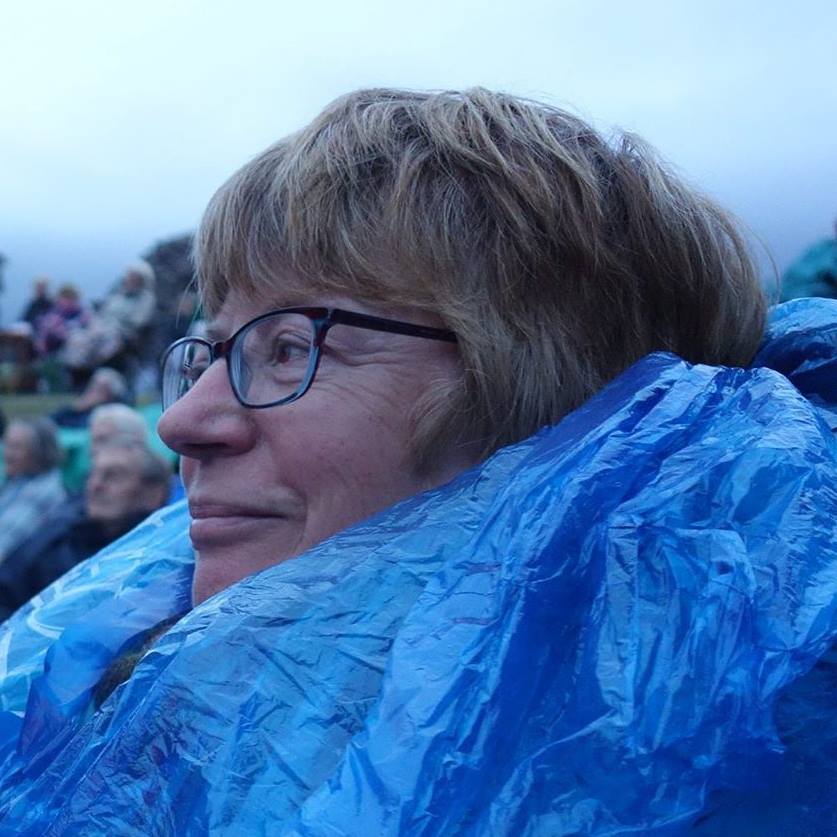
Cath Barton’s award-winning novella, The Plankton Collector, is a modern-day parable, a allegory for a defeated world. The Plankton Collector is that archetype from dreams and fairytales: a hero in disguise who arrives just as one family is on the ledge of their grief. This slim book gives you hope for humanity and lets you remember that angels are among us, watching, and, every so often–stepping in.
Nancy Stohlman: Describe this book in 6 words:
Cath Barton: Mysterious stranger helps grieving family recover
NS: This is your first published book! Has the process been what you thought it would be?
CB: I really had no idea what the process would be! I entered the book for the New Welsh Writing AmeriCymru Prize for the Novella in 2017, with absolutely no expectation of success as the competition was open to writers throughout the UK and in the whole of North America. So I was amazed and delighted to win, and that the prize included publication.
It was a whole year before the book came out and that seemed an awfully long wait. I understand more about timescales in the publishing industry now!
NS: You say in your Acknowledgements that you weren’t planning to write a novella until challenged. Where did the idea for this story come from? Had this idea always been there or did it come after the challenge?
CB: The family in my book started life in a flash fiction piece I had written as an exercise some time before the challenge, about a boy looking out of his window at his mother visiting the grave of his brother. The graveyard is just beyond their garden. The house, the garden and the graveyard became key locations in the novella, which grew around the death of the brother. As for the Plankton Collector who helps the family, where is came from is as mysterious as everything else about him!
NS: Have you ever met the Plankton Collector?
CB: Not yet, as far as I know, though I could of course have been sitting at the next table to him in a cafe without realising it. As could you!
NS: How did your experience writing flash fiction help you write a novella (or not)?
CB: Yes, I think the discipline of working on flash, making every word is essential, is good training for the novella form, where not only is there no room for excursions from the story, but also, I feel, the emotional content is very concentrated. I like that – I’m not by nature a discursive writer, and I appreciate the challenge of making a story as taut as possible.
NS: The Plankton Collector won the 2017 New Welsh Writing award—congratulations! Do you consider yourself a Welsh Writer? If so, what does that mean to you?
CB: Thank you! The answer to that is yes – and no! I wasn’t born in Wales, so I’m not Welsh. I have lived here since 2005, and I do have an affinity with the country, but so I do with England, where I was born, and Scotland, where my parents were from. I identify as a British writer and also, I might add, as a European one.
Of course, as a writer living in Wales I have access to some specific writing opportunities, for which I’m very grateful. I was given mentoring support through Literature Wales last year, which helped me complete a collection of short stories.
NS: You have another book coming out later this year, I believe? What can we expect from that book? How is it similar/different from The Plankton Collector?
CB: I’ve got a second novella coming out in September 2020. It’s called In the Sweep of the Bay, which refers to Morecambe Bay, in north west England, where it’s set. It’s about a family as The Plankton Collector is, but focussing on the joys and sorrows of a long marriage, so the emphasis is different. And there’s no magical realism is this one.
NS: What is your best advice to someone who is writing/wants to write a book?
CB: Concentrate on the writing – tell your story the way you want to. Don’t think about publication until you’ve got the book done.
NS: Anything else you want to add?
CB: Thanks so much for inviting me along, Nancy!
The Plankton Collector is available in the US through Amazon as an e-book and also in paperback.
Also through Barnes and Noble as a paperback or NOOK book.
UK readers can order on-line through Amazon, Gwales or any branch of Waterstones.

Cath Barton’s prize-winning novella The Plankton Collector is published by New Welsh Rarebyte. Her second novella, In the Sweep of the Bay, will be published by Louise Walters Books in September 2020, and her short story collection, The Garden of Earthly Delights, by Retreat West Books in early 2021. Cath is also active in the on-line flash fiction community and is a regular contributor to the online critical hub Wales Arts Review.https://cathbarton.com/ @CathBarton1


FlashNano Year 8!
More info coming so stay tuned!
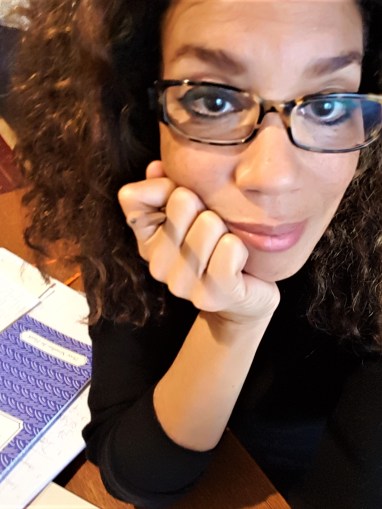
Charmaine Wilkerson’s prize winning novella-in-flash, How to Make a Window Snake, is a spinning constellation that orbits one family’s grief, circling around and around what cannot be said…or forgotten. Her narrative is crisp, dense and deep–the entire iceberg under the water. Paired with the two runners-up for the Bath Novella-in-Flash award, A Safer Way to Fall by Joanna Campbell, and Things I Dream About When I’m Not Sleeping by Ingrid Jendrzejewski, How to Make a Window Snake is a trifeca of a book and an incredible showcase of the form.
Nancy Stohlman: In the spirit of flash fiction, describe this story in 6 words.
Charmaine Wilkerson: Loving family. Menacing lake. Fake snake.
NS: Talk about the novella in flash form. How do you see it as different than, say a flash novel? Or not?
CW: The magical thing about the novella-in-flash is that each chapter can be read like a stand-alone piece of flash fiction, even though the parts add up to a larger story. By contrast, I tend to think that a flash novel can be more loosely structured, especially if it runs two or three hundred pages, as long as the chapters are short and pack the same sensory or emotional punch that I expect from a piece of flash fiction. Your own Monster Opera does that. And, in my mind, the term flash novel could be applied to books like George Saunders’ Lincoln in the Bardo or Mark Haddon’s The Curious Incident of the Dog in the Night-Time
NS: I absolutely agree (and thank you!) Was this story being written already or did it happen as a result of the form? Chicken or Egg? Have you tried to tell this story in other ways?
CW: Chicken, definitely. Actually, this story was more like a bunch of baby chicks, fuzzy little mini stories, dashing back and forth across the same dirt yard, pecking at different themes here and there, until one day, a mother hen waddled over and said, Hey, you chicks, you’re all part of my brood, so get on over here! I didn’t try to tell this story in any other way, though I did write other flashes in this series that were not included in the novella.
NS: My very favorite thing about this story is your use of repetition—each story stands alone but echoes the previous stories—circular rather than linear. But the repetition feels necessary, not superfluous. Talk about that choice.
CW: Thank you. Finally, someone who doesn’t complain when I repeat myself! Seriously, I do tend to come back to certain words or phrases or rhythms when I write, though not always. In this novella, the repetition emerged naturally but I took time to sharpen the pattern during the final editing stages. I saw this as a way to strengthen the connections between the chapters, since the narrative goes back and forth in time and skips from one character’s point of view to the next.
NS: I find it interesting that the family in this story is circling around their own griefs—what do you think the story/form says about grief?
CW: One aspect of the human experience that continues to intrigue me is how, despite the power which grief has to alter us, we may still be able to love and play and have meaningful and satsifying lives. I found that writing about these different characters in short passages made it easier to mix these dimensions and, also, introduce other issues which they were facing.
NS: Are there other books whose form inspired you as you were creating this?
CW: One book I can recall going back to while writing this story was My Very End of the Universe, an anthology put out by Rose Metal Press with stories by five masters of the form. The authors’ accompanying essays held great resonance for me, especially Meg Pokrass’s discussion of creating a narrative from “scraps” and Aaron Teel’s discussion of “mimicking memory” through flash fiction. It felt as though these two essays were speaking to what I was writing that year.
NS: How to Make a Window Snake won the first Bath Novella-in-Flash award and was published in one book with the runners up, A Safer Way to Fall by Joanna Campbell and Things I Dream About When I’m Not Sleeping by Ingrid Jendrzejewski. How do you see these novellas playing off of each other?
CW: I am immensely grateful to the Bath Flash Fiction group and Ad Hoc Fiction for embracing this form of expression. It was very exciting to see such different stories selected by one judge, Meg Pokrass, and published together. The language used from cover to cover ranges from chatty to poetic to surreal. What I think these novellas-in-flash have in common is an intense gaze, heightened by details that leave a trail of emotion in their wake.
NS: I found it extremely unusual that none of your stories were published before the manuscript was submitted. How wonderfully risky! Your thoughts around publishing excerpts vs saving it all?
CW: The decision to share excerpts beforehand should be determined by the individual writer, based on their objectives and how those aims fit with the requirements of the magazines and book publishers on their wish list. In my case, not publishing individual flashes wasn’t really a risky move because they were all such new stories, anyway. I did submit a couple of the flashes to other outlets but soon received word that I had won the Bath competition, so that was that.
NS: What is your best advice to someone who is writing/wants to write a book?
CW: When I write fiction, I don’t think of it as a book. I think of it, first and always, as a story, or just an idea that needs to be captured. And I don’t always write what I’m thinking. I might take a snapshot or record natural sound on my mobile phone. I have a lot of recordings of water—the sea, a lake, a brook. The sound helps me to see things. Someone else might prefer to sit down and plot out everything ahead of time. What’s important is that you allow yourself to do whatever works for you in the drafting stages of a story, whatever helps you slip into that creative stream.
NS: Thank you for playing, Charmaine!
To buy How to Make a Window Snake: https://bookshop.adhocfiction.com/index.php?main_page=product_info&cPath=65&products_id=182

Charmaine Wilkerson lives in Rome, Italy. Her stories and essays have appeared in various anthologies and magazines, including Best Microfiction 2019, 100 Word Story, The Common, New Flash Fiction Review, FlashBack Fiction, Fiction Southeast, Bending Genres, Reflex Fiction and Spelk. Her novella How to Make a Window Snake won the Bath Novella-in-Flash Award in 2017 and the UK’s Saboteur Award for Best Novella in 2018.

 Nancy Stohlman