
Forthcoming from Bartleby Snopes Press
September 2013
Release Party and Premiere October 4, 2013
Stay tuned!
Forthcoming from Bartleby Snopes Press
September 2013
Release Party and Premiere October 4, 2013
Stay tuned!
Do you hate the idea of self-promotion? Do you tell yourself that you’re not good at it? That you shouldn’t have to do it? If you hate self-promotion, or even the prospect of self-promotion, you are not alone. No matter the genre, all artists seem to share a similar aversion. Most of us are still waiting for an agent/manager/publicist to come and rescue us from the prospect of having to promote…ourselves?
But why?
As artists, we have internalized certain agreed-upon stories, certain cultural mythologies that may be blocking our ability to put ourselves and our work out into the world. And since most of us agree that self-promotion is necessary, it’s worth taking a look at these stories and deciding whether perpetuating them is serving our art and our careers—or not.
1. The Starving Artist Story: “I’m not going to make any money at this, anyway.”
 If we were running a company, a large portion of our budget would go to marketing, right? If we were selling shoes, our livelihood would depend on us getting out there and selling some shoes. Even if we were running a lemonade stand, we would understand that, in order to sell lemonade, we would need to make signs or hire neighborhood kids with megaphones to let people know that lemonade is available. If no one knows about our lemonade, then no one will buy it no matter how fantastic it might be.
But when it comes to our art, we’ve swallowed a toxic “starving artist” story, which tells us that we’re probably not going to make any money at this, anyway, so we don’t take the task of promotion seriously. In fact, most of us would probably do a better job promoting the lemonade than we would the art that we have poured our blood and souls into.
It’s crucial to realize that if you want to make a career out of your art, then you have gone into business—with yourself. I am now the CEO of Nancy Stohlman, Inc., and my product is my work. If no one knows about my product, they can’t buy it. And then I am out of business.
But as long as we are stoking the starving artist story, then we’re going into the game already defeated. If we believe we cannot make a living out of our art…then we probably won’t.
2. The Overnight Success Story: “Once I’m famous someone else will do this.”
This is the story of the mythical artist who is catapulted into fame from obscurity with no promotional effort of their own. While this mythology is exciting, and the media loves to dangle it as some warped version of the American Dream, it’s also a bit like expecting to win the Powerball.
This overnight success story is a darling of artists and runs deep in our culture. But if you look carefully behind most successes, you will usually find a different story. Madonna made hundreds of demos with her own money and personally brought them to every DJ in New York City; Truman Capote sat for 8 hours a day in the lobby of the publisher who refused to see him. Even Rosa Parks, our favorite little old lady who wouldn’t give up her seat on the bus and thus triggered the Civil Rights Movement, was actually a veteran activist for 15 years when she was finally delivered to the right place at the right time.
Because that’s what it comes down to: “It’s not enough to be at the right place at the right time—you have to be the right person at the right place at the right time,” says musical agent Justin Sudds in his interview for “Take Your Talent to the Bank”. The truth of the overnight success story is that it is usually not overnight at all.
But what’s most problematic about the Overnight Success Story is that it is ultimately disempowering because it takes the responsibility for our careers out of our hands. Our careers become like playing roulette, and we feel powerless to affect real change. And I like playing roulette, but only with what I am prepared to lose.
3. “It’s Not Polite To Brag.” This country is still influenced by our Puritan roots, and so this story is the one that often paralyzes us into non-action.
Here’s the truth: Will some people be annoyed by your promotional efforts? Yes. But usually the ones who are annoyed, offended, or otherwise triggered by your efforts are the ones who have not yet embraced their own self-promotion. So it’s important to remember that their support or non-support for you and your work really has little to do with you and much more to do with where they are on their own path. It’s pretty hard to jump on someone else’s bandwagon when your own bandwagon is rusting in the garage. It’s pretty hard to muster up zest and enthusiasm for someone else when you haven’t put your own work out there in a big way, yet. So when you encounter this kind of resistance—and it can come from the most surprising places—be kind, and remember this quote: “Those who have abandoned their dreams will always discourage yours.”
But the rest of the people won’t care, and in fact they will be happy that you’ve made it so easy for them to support you and your work. It is said that a person needs to hear about something five times (yes, five!) before it sticks, and most people are happy for the reminders.
Self-promotion is not bragging. It’s asking for the support we need to make the careers we want.
In this Puritan society we are told that “it’s better to give than receive,” so we give, we give, we give…but most of us have a hard time receiving. And most of us have an even harder time asking for the support we need with clarity and confidence. If I want people to read my latest story—I have to ask. If I want people to come to my my website, my lecture, or buy my latest book—I have to ask. “Hey, I’d love it if you checked out my work and passed it along.”
In our everyone-for-himself society we have attached a stigma to asking for help. In order to get over this stigma, we have to remember that artists must exist in community, and in order to create and sustain a community, you have to put yourself out there with honesty and authenticity. Self-promotion is truly about asking for the support we need, and building relationships with those who are excited about us and our work. It’s the greatest thing you can do for the promotion of art outside of creating the art itself.
So when self-promotion starts to feel like self-prostitution, remember: We promote our work because we aren’t okay with the mythology of the starving artist; we respect our work enough to take control of its dissemination, not leaving it to the agent fairies to rescue us; we have both the confidence and humility required to put it out there in the world and ask for support.
Many of us don’t promote because we would rather fail privately than publicly We fear rejection and ridicule; we retreat into craft instead. And yes, it’s true that Emily Dickinson did no promotion. But then again, she never got to enjoy the rewards, respect, and recognition of her work while she was alive.
I want more for myself and my art.
And I want more for you, too.
Flash fiction by Nancy Stohlman
I walked into his office and closed the door. There were piles of papers everywhere and a deer head hanging on the wall.
What can I do for you? he asked.
Well, I just don’t know what I’m doing half the time anymore, I said. I think it would be great if you could keep an eye on me.
Sure, he said. Is someone threatening you?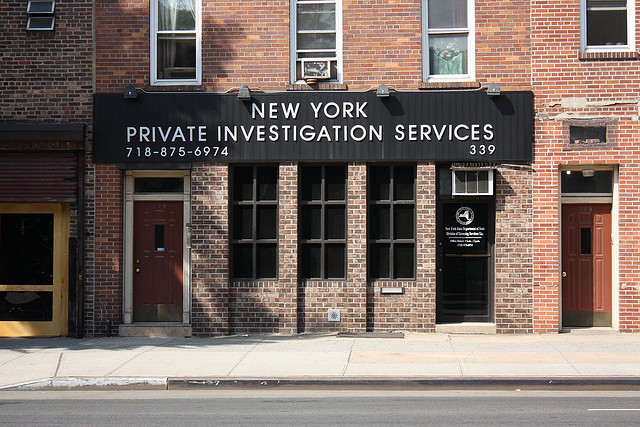
No, nothing like that. It’s just me. I can’t trust myself.
Any clues or suspicions?
No … but the whole thing is pretty suspicious.
He pats my hand. You’ve done the right thing, he says. Usually if you suspect something to be true, it is.
I left his office feeling much better. Almost immediately the eyes were upon me—cars that followed a bit too close and too long, people watching me from across the street. At home a red light blinked between the books on my bookshelf.
A week later I returned to his office. Well, we have news to report, he says. Are you ready?
Yes, I nodded, sitting down.
The first picture was my car parked in front of the post office. If you’ll notice, he says, circling areas of the photo, this is a no parking zone and the sign is clearly displayed. The subject arrived at 3:14 and parked for 23 minutes, in blatant violation.
I nodded, didn’t say anything as he handed me the photo.
During the car ride home, subject picked her nose and then, after looking around, consumed it. At 5:17 subject arrived home, drew all the blinds, and proceeded to watch XXX rated videos for 17 minutes, the final one, 80-year-old grandpa does his nurse, commencing in what we presume was an orgasm.
Subject, after watching said video, stared at the computer for one hour and forty-six minutes without pants on. The phone rang on three different occasions and the subject ignored the calls without even checking the caller ID.
Subject smoked marijuana at 9:16 and then took a bath while drinking an airplane-sized bottle of cinnamon flavored whiskey. During the bath, subject appeared to have a conversation with no one that lasted for 11 minutes.
At 11:34, subject got into bed and read a book until 12:13, when she turned off the lamp to presumably sleep. Then the most curious of all: at 12:21, just 8 minutes later, the subject got out of bed and laid directly in the middle of a moonbeam shining through the skylight. Subject cried until 12:31.
After that, our man couldn’t see anything else. He handed the stack of pictures to me.
I sighed. I’m not completely surprised.
If it makes you feel any better, I see this kind of thing all the time.
I guess it’s just better to know for sure.
I’m sorry to be the one to have to tell you, he added, handing me a tissue.
Originally published in Atticus Review. Read original here.
Do you have a manuscript you’ve been sitting on forever? Are you stuck in the writing phase or in the revision process? Or have you “finished” but not gotten the response you wanted out in the world?
In this workshop on finishing we will explore:
• What’s keeping you from finishing?
• Are your blocks telling you something about your manuscript?
• How to fall back in love with your work and your vision
• Allowing your manuscript to transform
• Publication—is your manuscript ready to send into the world?
• The different stages of “finishing” a manuscript
• Self-promotion—are you afraid of rejection? (You’re not alone.)
• Finding the support you need to take the next steps
 In this 4-week virtual workshop I’ll give you the deadlines you might need, help you structure your writing time into your life, help you transition more easily between creation and revision, and help you become your own best editor. Whether you are planning to submit or self publish, you’ll learn writing tips, editorial and publication advice, how to excerpt and query, and even when to let a manuscript go. And most importantly, you’ll finally rescue your work from the desk drawer and give yourself the satisfaction of completion.
The workshop format will include weekly online instruction, telephone check-ins, and professional line edits (limited). Both fiction and nonfiction manuscripts are welcome.
Begins July 1. For late registration or a free info call contact me ASAP at nancystohlman@gmail.com.
Let’s do it.
 Nancy Stohlman