How to Take a Mini Solo Writing Retreat

I’m a big believer in writing retreats. Even if you write every day, it’s important to periodically dive more deeply into your work for a sustained amount of time. But sometimes a week-long retreat isn’t possible or maybe it is possible but it’s too far away and your writing relationship needs an intervention right now.

What then?
Enter the solo writing retreat weekend.
20160711_135237

I’ve been doing mini solo writing retreats out of necessity for many years, and I like to think I have just about perfected the micro condensed, inexpensive yet highly effective solo writers retreat. Don’t get me wrong–while it’s absolutely amazing to give yourself the gift of an official retreat, MUCH can be done in a solo weekend or even daylong retreat if you do it right.

Here is my mini retreat formula and some guidelines:

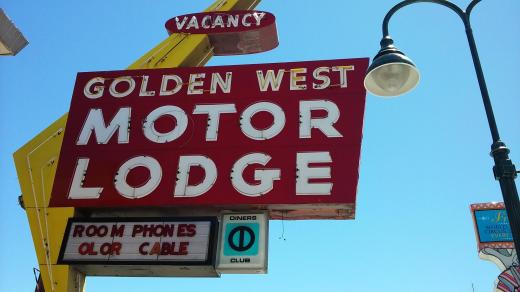
1. You must get out of your house but you shouldn’t go somewhere too interesting. Some of my most productive mini writing retreats have happened at a friend’s empty condo or the cheapest Travelodge or Motel 6 I can find. The point is to stay in your room and write. Bad weather is a bonus.

2. You must be alone. No visitors. Non-negotiable.

3.  To really dive deep you need one entire 24-hour period, so I recommend you arrive at your retreat spot the day before if you can so you can wake up ON your retreat. If Saturday is my retreat day, I check into the hotel on Friday after work.

4. Take food with you lest you be tempted to go out exploring. Food should be simple, relatively healthy, easily available, and not overly interesting, food that won’t put you into a junk food/sugar coma (and needing a nap) but will keep you from needing to interrupt your work and go out to eat.

5. Try to avoid alcohol (and other substances), and sugar until you have FINISHED your retreat.

6: Beware of cable television and internet surfing, both of which are distractions on retreat as they are in real life. Consider only checking the internet during designated times (I give myself 10 minutes at the top of each hour).

Here is what a mini weekend retreat schedule looks like for me:

Friday: Take overnight bag and computer with me to work and drive to location right after. Check in. Go to closest grocery store and buy food for the weekend. That night: Spend 1-2 hours rereading my work so it’s fresh in my mind and percolating in my dreams. Go to bed early so I can wake up early and begin.

Saturday: Retreat Day
Morning: Wake up and start writing. Eat and do a good 2-3 hour chunk of writing before noon.
Lunch Break: (no more than 1 hour). Weather permitting take a quick walk to get the blood pumping.
After lunch: another 2-3 hour chunk of writing.
Late afternoon/early evening—At this point if the work has been going well I might take a few hours off. Take another walk or maybe eat a quick dinner out. Maybe take a nap if needed (but set alarm!).
Evening: Another 2-3 hours of writing after dinner.
Night: NOW watch bad cable, eat sugar, drink wine, and decompress. Sometimes if I’m feeling particularly accomplished I’ll go to a late movie.

Sunday: Wake up and get at least one more 2-hour chunk of writing in before checking out.
Go out to celebration lunch on the way home. *Very important to celebrate your successes!

If you’ve been doing the math, that’s somewhere in the range of 9-13 hours of writing in less than 48 hours! That’s A LOT of writing. And as a bonus you will probably also get good, extended sleep, lots of self-reflection time, and maybe a dip in the hotel hot tub. You will leave feeling accomplished and in motion with your writing and you will wonder why you haven’t done it before…and whether you can pull it off every month.

Maybe you can????

To your success!
xoxo

PS: Let me know how this works for you!

PSS: AND if you also want to come on a longer retreat with me and other writers, consider 4 days in the Rocky Mountains in August or a week in Costa Rica in March 2020!
Find out more

Thursday, July 5: Featured Reader at Paris LitUp!

Paris Lit Up featuring Nancy Stohlman

PLU Open Mic featuring Nancy Stohlman
Get your sunglasses at the ready, because July 5’s featured performer is queen of flash, the author Nancy Stohlman! Sign-up from 8, shades on at 8.45pm…
Nancy Stohlman is the author of the flash fiction collection The Vixen Scream and Other Bible Stories, the flash novels The Monster Opera and Searching for Suzi, and three anthologies including Fast Forward: The Mix Tape, which was a finalist for a 2011 Colorado Book Award. She is the creator and curator of The Fbomb Flash Fiction Reading Series, the creator of FlashNano in November. She lives in Denver and teaches at the University of Colorado Boulder. Her newest book, Madam Velvet’s Cabaret of Oddities, is forthcoming in the fall of 2018. 
Paris Lit Up Open Mic

Paris LitUp happens every Thursday in English (other languages too – when in Rome, speak French) at the historic home of French Slam poetry, Culture Rapide (103 Rue Julien Lacroix, 75020).  If you would like to read, dance, sing or otherwise express yourself, sign up is open and free to all starting at 8pm-ish. We go until we drop – which means all night long! In any language. Or no language at all. No limits. From extreme poetry and explosive prose to exhilarating music and even excellent theatre.

Plus, each week Featured Performers from around the world are invited to strut their stuff before our rowdy but respectful audience.

Rotating hosts include Ed Bell, Matt Jones, Jason Francis Mc Gimsey, Emily Ruck Keene and special guest hosts.

The Huffington Post!

12 Super Short Stories You Can Read In A Flash

Posted: 03/16/2015 8:27 am EDT Updated: 03/16/2015 1:59 pm EDT
WATCH

Amelia Gray, Lindsay Hunter and a handful of other recently buzzed-about novelists got their literary starts in shorter-form writing. No, not poetry — the more nebulous medium of flash fiction. Loosely defined as writings comprised of 1,000 words or less, flash fiction can include everything from slightly longer works to tweet-length stories. The one restriction? A work of flash fiction must have a narrative arc, otherwise it’s a mere observation or vignette.

Gray’s move from flash fiction writer to novelist was a difficult transition for the writer, who’s returned to shorter form in her latest collection, Gutshot: Stories. In an interview with Flavorwire, she explained that her flash fiction collection was “a multifarious but cohesive piece of work.” She added, “Sustaining a true narrative over the course of a novel was a unique challenge.”

Hunter described a similar struggle with novel-writing in an interview with The Believer: “I decided the only way I could write a novel was to sit down and write the way I knew how, which was to give myself a daily word count goal, and to treat each ‘chapter’ like a flash fiction piece.”

Of course, flash fiction shouldn’t be seen as a segue into novel-writing; some writers waffle between the mediums, whereas others stay devoted to producing quick, evocative pieces. We’ve collected 12 of our favorite recent pieces of flash fiction, both by established novelists and writers happy working solely within the shorter form:

“Out There” by Lindsay Hunter
Published by The Nervous Breakdown
First sentence: “People burn cars out there.”

“Robot Exclusion Protocol” by Paul Ford
Published by Ftrain
First sentence: “I took off my clothes and stepped into the shower to find another one sitting near the drain.”

“Charlie Loved the Circus” by Simon Sylvester
Published by The List
First sentence: “Charlie loved the circus.
Untitled by Deborah Levy
Published by The Guardian
First sentence: “I said, yes.”

“These Are the Fables” by Amelia Gray
Published by Recommended Reading
First sentence: “We were in the parking lot of Dunkin’ Donuts in Beaumont, TX when I told Kyle I was pregnant.”

“I’m Being Stalked By the Avon Lady” by Nancy Stohlman
Published by Cease, Cows
First sentence: “At first it wasn’t so bad.”
“Lady Gaga Considers the Shrimp Scampi” by Steve Almond
Published by New Flash Fiction
First sentence: “There were fifty thousand little monsters screaming for an encore, Spaniards, Germans, skinny little French boys, Italians making wet sounds with their tongues.”

“Huxleyed Into the Full Orwell” by Cory Doctorow
Published by Terraform
First sentence: “The First Amendment Area was a good 800 yards from the courthouse, an imposing cage of chicken-wire and dangling zip-cuffs.”

“The Lamp at the Turning” by E. Lily Yu
Published by Kenyon Review
First sentence: “For ten years the streetlamp on the corner of Cooyong and Boolee kept vigil with the other lamps along the road.”
“How to Sit” by Tyrese Coleman
Published by PANK
First sentence: “Grandma slapped my foot, uncrossing my legs.”

“The Solidarity of Fat Girls” by Courtney Sender
Published by American Short Fiction
First sentence: “It is your luck to be the brother of three fat girls.”

“Maybe We Should Get Tattoos and Other Possibilities for Happiness” by N. Michelle AuBuchon
Published by Hobart
First sentence: “I don’t know if my husband and I are on the way to church or a hangover.”