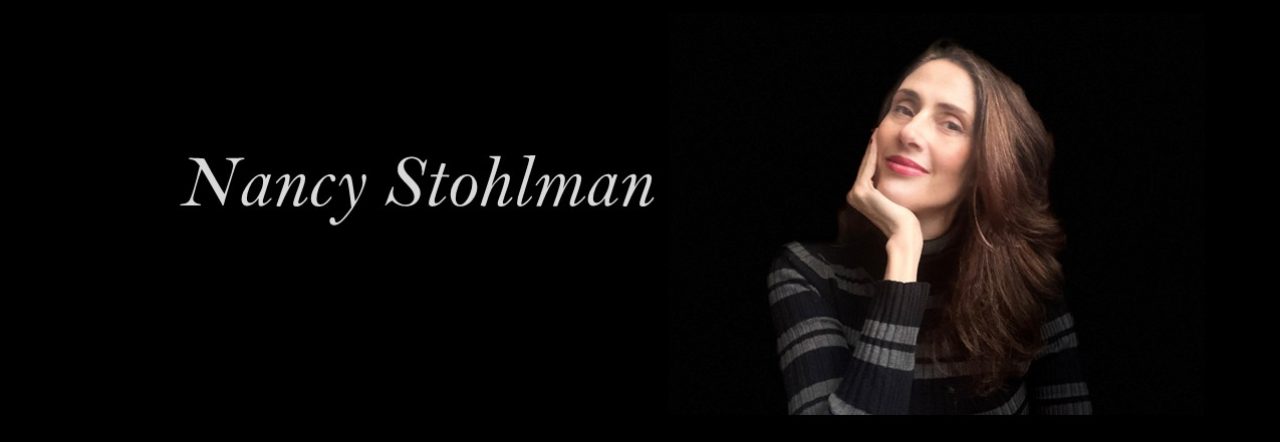
Nancy Stohlman and two Flash Fiction Events coming to Portland Nov 19-20!

Nancy Stohlman is coming to Portland for 2 Flash Fiction events next week!

Tuesday, Nov 19, 7 pm: Figures of Speech Reading Series with Nancy Stohlman and Kirsten Rian
In Other Words Feminist Community Center
Corner of N Killingsworth and Williams
web site: http://inotherwords.org/
www.figuresofspeechpdx.wordpress.com

FREE!

*

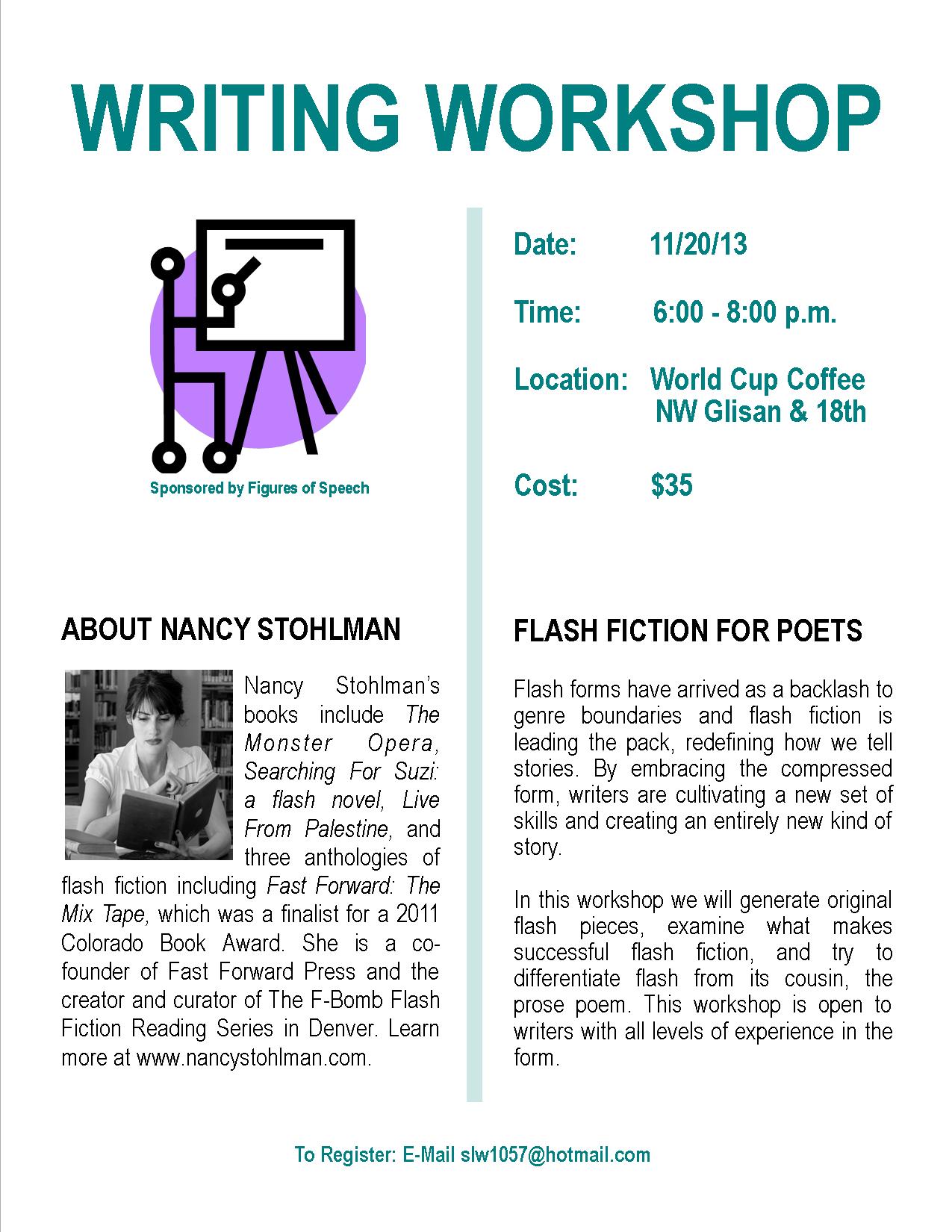
Wednesday, Nov 20, 6-8 pm: Flash Fiction For Poets Workshop

Flash forms have arrived as backlash to genre boundaries and flash fiction is leading the pack, redefining how we tell stories. By embracing the compressed form, writers are cultivating a new set of skills and creating an entirely new kind of story. In this workshop we will generate original flash pieces, examine what makes successful flash fiction, and try to differentiate flash from its cousin, the prose poem. This workshop is open to writers with all levels of experience in the form.

World Cup Coffee Meeting Room.
World Cup is located on the corner of NW Glisan and 18th ave.
Web site is: http://worldcupcoffee.com/taxonomy/term/1

Limited workshop spaces. To register email: slw1057@hotmail.com
portland


Flashnano Pep Talk/Writing Flash Fiction: What You Don’t Say Is The Story

In the month of November, in solidarity with our Nanowrimo friends, we’ll attempt to write 30 flash fiction stories in 30 days.

So you’re going to try your hand at this flash fiction thing, huh?

In the beginning you will still very often land closer to the 1,000-word cut-off mark, trimming and pruning to make sure your story makes it into the official flash fiction guidelines. As you become more comfortable with the form you will find that your stories naturally shrink and start to land well beneath the 1,000-word mark.

What happens in between is a process of letting go.

Boy-Jumping-From-a-Plane-with-an-Umbrella-76482First of all, let go of being good at it. Whether you come from poetry, longer fiction or nonfiction, it takes a while to get used to the new form. So let go of the need to be an instant expert. So many of us find it frustrating to “start over” and embrace being a beginner in a new genre. I invite you to instead see it as an opportunity.

Let go of exposition. We have become fond of our exposition techniques, our lush, sardonic, witty, poignant, clever, or otherwise expository voices. This is often the first thing to let go of in flash. It doesn’t mean you must let go of it altogether, but your urgent storytelling voice must trump your love of exposition for the magic to happen.

Let go of description. Not all together, but let your description come only in service of your storytelling. Let go of the urge to linger. In flash fiction, one well-placed detail brings an entire story into focus. Opt for one or two telling details over a wash of description—you just don’t have that kind of time.

Let your silences become informative. Don’t rush to fill them. As we learn to let go of exposition and description, we learn to embrace silence as a tool, and the juxtaposition of silences to infer information.

Let go of extra words. Try removing words and see if you can create potent gaps of intuition. See how much you can not say. Often what you don’t say is the story.

So what’s left you ask?

What’s left is tightly crafted little nugget of concentrated gold.

What’s left is flash fiction.

~Nancy Stohlman

Check here for daily Flashnano Prompts during November.

Join our Facebook Event page here.

“The Reluctant Hero”

Flash fiction by Nancy Stohlman

I wanted to just keep walking and pretend I hadn’t seen it. I knew plenty about bags floating in rivers. It wiggled, and I knew I should stop but I kept walking, and I was reminded of my mother sneaking me down to the edge of the river, showing me all the empty bags left in the mud like used condoms – look at those stories, she would say, people just threw them away like trash! They could have lived. And then she would fall to her knees and pray to her god.

So when I saw the woman leaving the edge of the river, I knew what was going on. I avoided eye contact with all the gypsies, beating deflated pillowcases against rocks as I crawled up the muddy banks and caught the tail of the story. I dragged out the waterlogged thing and took it home, where I set its cold, blue body gently on the page and let it live.

Originally published in Flash Frontier. Read original here