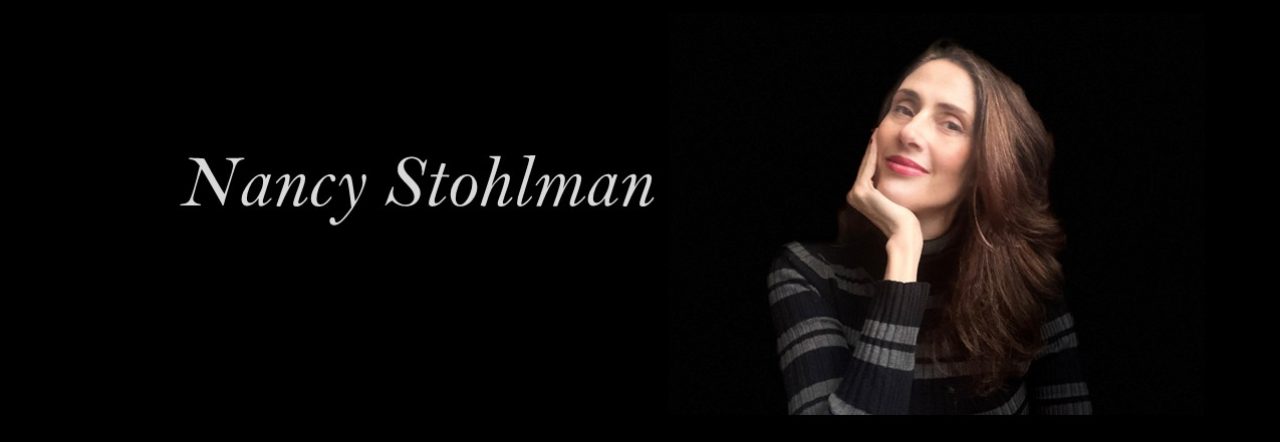
July 20: Denver Fbomb with Host Nancy Stohlman and Featuring Rob Geisen in “Things That Are 50”

Our July Fbomb is a Throwback to the Very First Fbomb ever in 2013 with original host Nancy Stohlman and original featured reader Rob Geisen!

As always, expect readings from host/feature/open mic guests that are hilarious, irreverent, profound, thought-provoking, satirical, and just about everything else.

You have never been to a reading quite like Fbomb! Discretion advised (don’t bring your grandma!)

Join us on July 20 at 7:30 pm MDT on Zoom!

YOUR PROMPT

Travel back in time to the year 1971: a year that first saw the birth of Walt Disney World, the Apollo 14 Mission, the First Email, and the first McDonald’s Quarter Pounder.

What else is 50? Mark Wahlberg aka Marky Mark (raise your hand if you remember Marky Mark and the Funky Bunch). Mary J. Blige! Shannen Doherty! Ewan McGregor! Malibu Barbie!

So is Willy Wonka and the Chocolate Factory and A Clockwork Orange: 2 of the best book to film adaptations!

Both Dirty Harry and Shaft were born in 1971!

Did you know: $50 in 1971 is equivalent to about $332.34 today?

OR take another approach to the 50 number prompt: Maybe a 50 word story, a 50 sentence story, or a list of 50 Things…

There will be a limited number of open mic spots–sign up at the event!

Have fun and happy writing!

Zoom link

Nancy Stohlman’s latest book, Going Short: An Invitation to Flash Fiction, was a 2021 Reader Views Gold Award winner, a Next Generation Indie Book Award finalist, and an International Book Awards finalist. Her fiction has been anthologized widely, appearing in the W.W. Norton anthology New Micro: Exceptionally Short Fiction, Macmillan’s The Practice of Fiction, and The Best Small Fictions 2019, as well adapted for both the stage and screen. She teaches at the University of Colorado Boulder and around the world. Find out more at www.nancystohlman.com

Rob Geisen. Author of Beautiful Graveyards, Paper Thin, Avenge Me, The Aftermatch etc, I See You Lewis. Guitarist, Casio Keyboardist and broken romantic for the band Girls Just Wanna Have Us. Currently focused on writing sci-fi novels and learning everything there is to learn about The Outer LImits, the history of paperback science fiction, Theodore Sturgeon, and the works of Jake E. Lee. He used to host open mics with Olatundji Akposani. He used to be Get in the car, Helen. He used to not almost be 50 years old.
The Writer as Student: Why You Need a Reading Syllabus

First, a confession: I’m a slow reader. It’s a curse because I know I’ll never finish all the amazing books out there (I even wrote a story, “What Happened in the Library”, where the narrator hired a reading clone). I’ve had to accept that I can only finish 1 or 2 books a month while other friends (you know who you are!) get through a book or two every week.

Seeing this as a weakness, my life was changed forever when I read and photocopied for posterity an article titled “The Intentional Reader” by Bob Hostetler in Poets and Writers back in 2000. The original is no longer available but here are two excerpts that together capture the essence of what I read back then: The Intentional Reader and Do You Plan Your Reading?

8770a76c-4675-44d9-9d04-97483e223c85
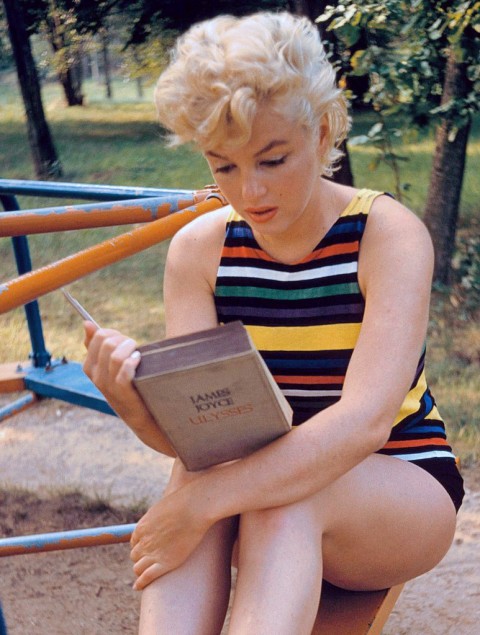
Marilyn Monroe reading James Joyce’s Ulysses

In the article, Hostetler encourages writers to intentionally read out of our comfort zones. This “intentional reading” is a potent way of keeping ourselves “schooled” and challenging our minds…and that will ultimately improve us as writers (and human beings). Too often we habitually reach for a certain style of book (because we like it!) or we read what was recommended/loaned by a friend (and if you are like me books by friends–woohoo!). While there is nothing wrong with reading spontaneously, it can keep us from challenging ourselves as readers because those books are never at the top of our list/bedside pile. And sadly, without a clear action plan to purposely challenge ourselves as readers and approach different/more intimidating texts…it usually doesn’t happen. Not because we don’t have good intentions to read this or that book or author or more about that topic…but because time and reading have a way of slipping away from us.
Marilyn Monroe reading James Joyce’s Ulysses

So… the Intentional Reading Syllabus is an action plan, a way to take charge of our own continuing education.

For many years I created my reading syllabus as part of my New Year’s Resolution (and that works great!), but it works equally as well at the start of a new school cycle. As teachers and professors are putting together their syllabuses and outcomes for their students, it’s a natural time for writers to do the same, setting clear reading goals for yourself so you always know what to read next as well as why you are reading it.

Inspired by Hostetler’s original list, and refined over the last 20 years, here’s my modified Reading Syllabus Template (feel free to steal it!)

·         3 books by authors I’ve never read before

·         2 classics

·         2 rereads

·         1 new book by a favorite author

·         2 books on writing

·         2 nonfiction books on topics I know nothing about

·         1 book of poetry

·         1 memoir

·         1 biography

·         1 children/YA book

·         1 play

·         1 book in translation

·         1 mule choker (Hostetler’s term: i.e. a book over 700 pages)

That’s 18 books. Add to that various other books that come up during the year and that’s about all I can handle.

What I’ve found after doing this practice for almost two decades is that even if I don’t get to everything on my list, having the list at all keeps me focused, consciously choosing to read away from what is familiar or comfortable and into what is not.

So, as the new school year approaches, consider making your own Reading Syllabus for the year. Then print it out and hang it above your desk or work area.

Because, if you’re like me, you get crazy satisfaction from checking things off a list.

Happy Reading!
xoxo

On Finding Inspiration: Holy Boredom

I’m bored the kids whine as soon as summer begins. Boredom seems bad. And it’s so easy to fill the empty spaces with a million easy-to-reach options: from food to electronics to conversation. “If you have time to lean, you have time to clean!” say the Ghosts of Restaurant Managers Past. Empty time seems wrong somehow.

But let me suggest, after putting it to the test myself, that the real key to finding inspiration no matter where you are is a healthy dose of Holy Boredom.

I’m writing to you now at the end of my sabbatical. (After 10 years of teaching college I decided that I was giving myself my own sabbatical!) And I’ve discovered that even on sabbatical, once the initial excitement wears off, it’s easy to get bored. My budget wine-cellar-turned-apartment has no television. Internet is spotty and unavailable altogether once I leave my apartment. But it took me about a week to discover this because, of course being someplace new makes you want to walk, explore, snap pictures. Which is why inspiration, real inspiration, did not arrive for me until week 2, when I’d explored all the crannies, eaten at all the restaurants, took all the pictures, and finally found boredom.

Holy Boredom—that place of nothing-ness where everything already lives.

beach crop

My guru is always (gently) reminding me that I need to meditate. I try. I have an app. I schedule it in my normally busy schedule, in between A and B. But the real point of mediation, as I understand it, is to quiet the mind, to silence the honking horns of urgency.

Holy boredom is to creativity what meditation is to the mind. Intentional stillness. Wide open space with no agenda. We think we’re so busy because the outside world is always pushing down on us (insert job, obligations, etc.) But also we do it to ourselves. We keep our mind busy, spinning, distracted. it’s not until you reach a place of actual boredom that inspiration, that deep inspiration, can shyly arrive.

So it’s not the table with the view by the sea that creates the inspiration—it’s the wide spaces of nothingness you create around the table. Staring out a window with no agenda. A long silent walk (with no phone). Room for boredom without the usual distractions: music, television, conversation.. It’s from that deep stillness your most original ideas can finally bubble to the surface.

As a disciplined person, one who normally uses all time available with military precision, scheduling in boredom seems, well, silly. But the good news is that this can happen here, now: you don’t have to travel anywhere to create pockets of holy boredom—they already exist, we just fill them so fast we don’t even see them: whoosh! Gone. So this summer, if scheduling “writing time” seems too intimidating or exhausting, why not just make room for a bit of daily boredom in those spots that you usually fill with blur and noise and see what bubbles up instead?

To Your Success!

PS: Maybe find a Boredom Buddy to keep you accountable?

PSS: Tell me how it goes!

Flash Novel Writing Workshop

Write a Flash Novel with me in July!

Write a Flash Novel (online course)

July 8-19, 2019

This class is now SOLD OUT.

7ce163b50c8d11cda50c0af6d803e41cDo you have a large, book-length idea that you’ve been wanting to bring to fruition? Do you love the intensity of FlashNano or NaNoWriMo? Then get ready: In 10 days we will create a literal “flash flood” and you will leave the workshop with the bones (at least) of a flash novel.

What’s a flash novel? With the scope and complexity of a novel, and the size and ingenuity of flash fiction, the flash novel is a new type of book, a breakout genre that can deliver a sophisticated reading experience in a compact space. In this workshop will envision, draft, collage and create the momentum for that large-scale idea you have been wanting to tackle.

Participants should come with a basic understanding of flash fiction and have ideas for a book-length concept.

Cost: $149