Welcome to the Monster Opera: Chatting with Nancy Stohlman About Relationships, Writing, and Flashing

by Nathaniel Tower

Read the original here

A few months ago, Bartleby Snopes Press announced its call for Flash Novels. This was an idea that had been brewing in my mind for a couple years, but I wasn’t quite sure how to do it. When the idea for Flash Novels just wouldn’t go away, I decided it was time to go for it. Similar to last year’s shortlisted Post-Experimental issue, I knew it would work its way into something real.

So far, we’ve accepted three Flash Novels, all of which we’re excited to publish. Perhaps the quirkiest, and maybe the most important, is Monster Opera by Nancy Stohlman. Unbeknownst to me at our original launch for submissions, Nancy Stohlman had actually already invented the term “Flash Novel” and published one of her own.

I had the pleasure to sit down and chat with the self-proclaimed (and confirmed) creator of the Flash Novel. Here’s what she had to say. Nancy Library Close up 2 (1)

Nancy, it’s an honor to chat with you today. As Managing Editor of Bartleby Snopes, I must say that I am extremely excited about publishing Monster Opera as one of our first flash novels this summer/fall. Let’s get down to business.

First, tell us about yourself as a writer. Don’t forget to include the details of the grand revelation occurred that made you become a writer (we all have one, right?).

Thanks, Nate! I’m so thrilled for this collaboration with Bartleby Snopes!

Well my grand revelation was more of a slow seeping…I came of age in the library. We were a military family, we moved every few years, so my connections with others were always fleeting. When I was learning to read I lived in Europe: West Germany, Spain. No internet. No American television. Long distance calls were expensive and rare. The library became my connection to the States, and then eventually to the world. I was volunteering at the library by the time I was 9, reading Nancy Drew and stamping people’s books.

So I guess I’ve always known. At nine years old I wrote a screenplay called Superman: The Musical.

The word “flash” always seems to pop up wherever I see your name. You work with the Flashbomb Reading Series, you run the website Ask a Flash Fiction Editor, and now you have this Flash Novel coming out. What’s with you and flashing?

I’m cracking up—maybe I’m just a literary exhibitionist! “Flash” is the safety word.

So my work has never fallen neatly into categories. This used to be extremely frustrating—I spent many years and several practice novels trying to make it behave. Finally in grad school a professor suggested I get a bit more ragged around the edges. I guess I just needed permission. But I think that can be said for genre as well—Flash is roughing them all up, calling them out. I believe we’re witnessing an artistic movement that’s creating an entirely new kind of writing. So for me the word flash means freedom—a true surrender into art.

Monster Opera isn’t your first Flash Novel. In fact, it seems you coined the term “flash novel” (although I hadn’t actually read any of your work when I decided to make up the term myself a couple years later). What inspired the flash novel?

I coined the term in 2008 for my Master’s thesis, The Flash Manifesto, at about the same time that I was finishing Searching for Suzi. Suzi was the first novel where I gave myself permission to stop writing a novel. At the time Wikipedia wouldn’t let me create a page for “flash novels” (they said you couldn’t create a page for a term), so when the book came I insisted that we put “flash novel” on the cover, even though it felt sort of silly at the time. “Flash novel?  You mean novella?” everyone asked.

No. See, we’re writers, we know the power of naming. I know very few writers aiming to write a novella, and I find this problematic, because there are many, many, many stories that don’t require 60,000 words. A lot of stories would be smothered in 60,000 words. But novelists continue writing novels with parameters set by big publishing, which is really the antithesis of the creative process. The story takes as long as the story takes.

So does that mean that flash novels are novellas with a makeover? No. Shakespeare knew it, Orwell knew it: thought follows language. We create a word, we create a possibility. We write things into being. Language creates meaning where there wasn’t meaning before. The flash novel is becoming, right now.

In one sentence, what makes a good flash novel?

A flash novel is an exquisitely sliced novel.

Tell us about Monster Opera. It’s been around for a while, hasn’t it?

Okay, so I have to confess that the same morning I got Bartleby Snopes’ email, I was in the process of breaking up with it again: “Look, you’re just too weird, I don’t think we can make this work.” It’s probably the most audacious thing I’ve ever written, and I doubted myself a lot in the process. Readers had only two reactions: dazed/awe, or complete confusion. So I had to really trust my vision, even when it didn’t make sense to me.

About two years ago I decided to do a staged reading (still unfinished then) with composer Nick Busheff and a small cast of opera singers and actors. We performed in an antique warehouse to a full house of people who all left with the “Monster Opera” daze on their faces—I actually overheard someone say, “I have to go home and think about what just happened.” All the enthusiasm gave me the confidence I needed to finish it. And though it lends itself to performance, I firstly see it as a written work.

Where did you come up with the idea for this cross-genre masterpiece?

Blushing. I was already a lover of opera and classical music, but then I discovered Gertrude Stein’s libretto Four Saints in Three Acts. For those of you who don’t know, composers usually hire a librettist to write the words to their music. When I discovered Stein’s libretto (in the library!), I was stunned. It was both pure opera and pure Stein. It was an amazing piece of writing.

Susan Sontag says the novel and opera are the two most antiquated artistic forms, not having evolved through the stages of modernism, post modernism, etc., that have shaped the other arts. Being a lover of both, I saw how these two forms were fighting for their own relevancy…and I wondered what would happen if I let them fight it out on the page?

You describe yourself as a promotional fiend. What are your promotional methods? What have you found that works and what doesn’t?

Ha! Yes, it’s a necessary evil, and one that I don’t think writers take seriously. People tell me, “You’re so good at it!” But my promotional methods are about 85% naïve audacity. I think my greatest strength is that I’m not afraid to fail—I’d rather fail than not try. When I hear (every!) writer say, “I’m not good at the promotional part,” I want to say, “Neither am I, I just show up and do it anyway!”

If we don’t use the same passion to put our work into the world, then we’re ultimately birthing it and abandoning it. And I’ve learned collaboration is crucial: None of us have to do this alone. That’s why I started the F-Bomb reading series—I wanted a place where I could put other people in the spotlight and say: Look! Look at yourself. See….own it. You are awesome.

What are your ultimate goals as a writer?

To write, full time, and make my living that way. I’m pretty sure if I were given the gift of time I might take myself into realms of creation that are still inaccessible to me right now. Ultimately I envision a world where artists are acknowledged as visionaries and paid accordingly.

Fill in the blanks: If Monster Opera doesn’t__________________then I will _____________________________________.

If the Monster Opera doesn’t leave you 100% satisfied, then I will personally come to your house with a bottle of wine and a VHS copy of Fatal Attraction, and you can explain your grievance in great detail.

Which of the following is most closely associated with Monster Opera (and why):

The Muppets

The Phantom of the Opera

“Monster Mash”

Monster Magnet

Monstropolis

The Phantom of the Opera, but unlike Phantom there’s a self-awareness—not unlike a Shakespeare comedy—of being inside of one’s one melodrama. It’s funny and tragic and haunting all at once. But Miss Piggy might make a fantastic Magdelena.

What’s one piece of advice you have for any writer, seasoned or rookie?

Stop worrying about publication! And most importantly, cross-pollinate: go to museums, orchestras, operas, fashion shows, comedy shows, go to movies alone, cook, draw, dance, take photographs, take adventure walks, read random things off library shelves. Being an artist is a way of life.

Now it’s your turn. Ask me one question. It could be about anything. Make it count.

Okay (rubbing hands): Why did you choose to actively seek flash novels for publication?

Fantastic question. Part of it, like with our Post-Experimentalism issue, is to explore the possibilities of writing. We’ve seen the short story condense itself in recent years. Could the same thing happen to the novel?

Maybe it stems from my desire to be able to read more books. I never seem to have the time, and often when I read novels these days, I often find myself disappointed in the end. It seems like many authors rush to create some finality or twist or shock in order to bring the thing to a close. That’s obviously a blanket statement that doesn’t reflect every novel, or probably even half the novels written. But it seems to be a trend in modern novel writing. So let’s buck that trend. Why spend all this time developing a plot and characters, making a reader invest all this time, just to let us down at the end? As you said, let’s slice that novel into something we can read maybe in one sitting and still feel the fulfillment of a great novel. I think you make an important distinction in your responses. A flash novel is not a novel. It’s not a novella. It’s not a short story. It’s something else. Something new. Hopefully something grand. Whatever the case, it’s a new monster.
Ask A Flash Fiction Editor: Size Does Matter

I’m excited to feature my old colleague, Nicholas Michael Ravnikar’s, piece in progress, “The New Addition”, for this conversation. Nicholas and I worked together on two flash fiction anthologies with Fast Forward Press, so I’m thrilled to revisit his work!

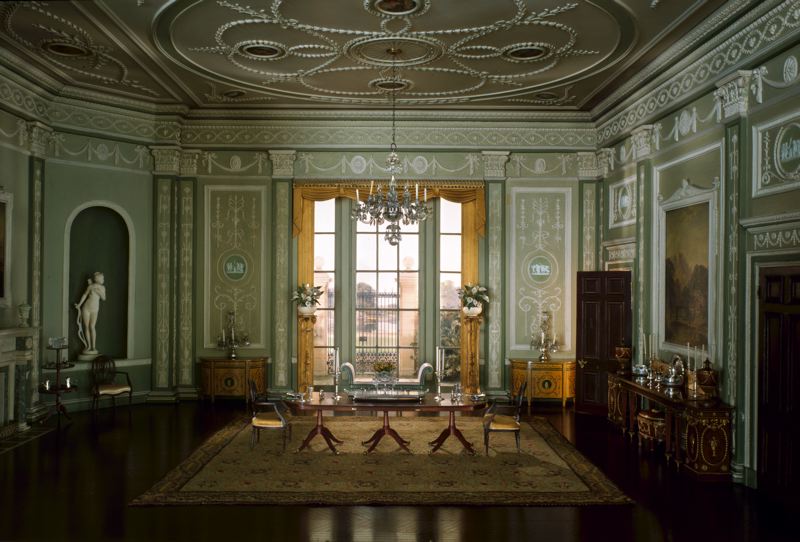
ImageOne of my favorite exhibits in the Chicago Institute of Art is the Thorne Miniature Rooms: tiny replicas of actual rooms painstakingly crafted on a scale of one inch: one foot. You press your face up to each of the 68 windows and gaze at the tiny world inside: fully formed rooms, complete with intricate period details, exotic woods, fabrics, chandeliers and hand-woven rugs. The attention to detail in each room would be fascinating even at life size, but the true fascination is the fact that they are just so damn tiny! Like painting the Mona Lisa on a grain of rice or a sculpture of Charlie Chaplin balanced on an eyelash.

So let’s go ahead and debunk flash fiction myth #1 right now: Just because it’s small doesn’t mean it’s easier. Anyone who has written poetry knows how long you can agonize over 100 words.

One of the reasons people love flash fiction is, like the Thorne rooms, there is something awe-inspiring about entering a perfectly formed little world. If it’s done correctly, the stature becomes part of the art: readers can’t believe they just had such a complete story experience in such a tiny space. It becomes more of a testament to the skills of the writer, not the other way around.

So Nicholas, let’s talk about your piece, “The New Addition” (full text below).

When I enter your piece it’s like I’m entering one of these exquisite little rooms. I’m immediately grabbed by the description of the ketchup sandwich all the way to the insect paste, and there’s an urgency that yanks me into the sentences like I’ve been kidnapped into your world. It’s so exciting. Within seconds I feel implicated in the story, as if by witnessing the action I’ve somehow participated in it. And that is really the beauty of abstract art: to invoke feelings that you couldn’t get to by more conventional ways.

But there is a lack of coherence that ends up pulling me into this exotic world and then leaves me stranded and confused. And I realize I’m in touchy territory because coherence isn’t always a goal for a writer. You are admittedly in love with language, and your world is so cleverly fragmented and infused with intrigue…but I feel like you lead us into the room and don’t lead us out.

And we’re so smitten that we almost want to forgive you for this.

But let me offer this suggestion: even if coherence wasn’t your original goal…we want so badly to understand! Because we want to stay in this world. Therefore, if you can give us both this imagery and intrigue and the satisfaction of really allowing us cognitively into the piece, it will go from beautiful to phenomenal and have a more lasting effect.

One of the ways that I think you could bring clarity to the story without sacrificing too much abstraction is to let your characters themselves be signposts: Right now the story begins with “they”, which we know includes her and someone else. Then we meet “you” narrating. Then we meet “her girlfriend” in Mexico—and we’re not sure if this is the other half of the “they” from the beginning or a fourth character. There is a “girlfriend’s drug dealer” as well as a “he’ that shows up at the end, which could be the other half of the original “they” or could be referring to the dealer. By the end of the story my brain is holding onto to all six threads trying to make them connect. But eventually I surrender and decide that in order to really get it I’m going to need to be 25% smarter.

So this is actually the flipside of what I was saying a few weeks ago about trusting the reader: Trust the reader, but leave breadcrumbs just in case.

Again, I realize that being crystal clear doesn’t have to be a goal. But the lack of coherence might be keeping readers at an unnecessary distance when you want them enmeshed, and I don’t think it wouldn’t take too many strategic clues to keep the reader fully engaged. Right now we’re being pulled out too often trying to make sense of it. But the bottom line is we want to stay in this room you’ve crafted, so throw us some crumbs and we’ll follow you, I promise.

Happy Writing!

~Nancy Stohlman

 (I welcome all comments and conversations, so join in! And feel free to find me on Facebook or contact me at nancystohlman@gmail.com)

THE NEW ADDITION

by Nicholas Michael Ravnikar

Ketchup sandwich in hand, the crest of winter, St. Patrick’s day. It’s around the time of the new addition. The wedding was last June. This is the first time since that they’ve slept apart. The sheet-plastic walls and the sawdust got to be too much for her. Then she thought of you, filled the gas tank and booked the same room. At least, she thinks it is. What a mouthful. No more of this.

Notice the sweet summer storm sort of sunset in this photograph she’s thumbing. You never gave her this one: your shirt after the plate glass lacerations, lying on a concrete Embarcadero bench. She had to dig around for a copy online—it wasn’t hard, with your public profile. She ordered a print from the Walgreens by the overpass. The blood dyes the fabric, amplifies her pulse. When did you last investigate the seams of her tendons audibly?

The telephone you left smeared with Jiffy your last night here sits beside her. She indexes your flat-naked craw, recalls how you threw the plastic salmon base cradle at her girlfriend’s dealer when you discovered them. Her loud skin, this browsing of images, and your thin grimace wondering back into her figure to arch her spine again. Slightly clad in low-thread count rough motel sham, her thighs fold over memories of you, of your calluses.

More of them are like us here.

Two blocks from Broadway, you meant. You could always appear tender.

Flamethrowers, she said.

Or else they had assault rifles.

Big difference.

Why did you have to see me first?

Then one can’t locate the other, and the latter keeps quiet. Eventually, she’ll call. Or he will, impossibly. Even if that, holding withered boundaries. And then captions run in yellow Ariel across the bottom of the flat screen: “Either the Vikings or the Raiders will kill us next year.”

You need to call babies human babies. She makes this resolution. And that helps a bit.

It’s even weirder when starlit seas compound her view of the village as she leans across the harbor, squinting. The next step of her calming calls for an insect paste smeared across the map of her features. It burns some. Then it comes: a sisterly smile. Stunning. The next morning, she drives home mumbling her five-year-old response to you: Life is never normal.

 *

Nicholas Michael Ravnikar saddles the tears of Mesoamerica with committees that bloom out the windows of his hopscotch factory. “Nine years ago, I watched a fire consume a kindergarten school desk,” he says. “We poured a makeshift absinthe on the embers. Today, I delight in more sordid fancies — for instance, skateboarding after three years at twelve in the afternoon.” With 83 texts (mostly English) in circulation at many small venues online and in print, he resides between one and twenty miles from the coast of Lake Michigan, just past the northern limns of the Illinois-Wisconsin border. Look for his haiku on Facebook.

The Homunculus

The Homunculus

 originally published in Revolver. Read original here.

After all my other birthday presents had been opened, he had one last gift for me. It was a tiny box that he held out with such a grin that I became nervous. What is it? I asked. Just open it, he says. Inside was a tiny man, about 6 inches high. He was dressed in tiny polo jeans and a tiny madras shirt with pullover sweater, and he looked very much like a tiny version of my boyfriend.

It’s a homunculus, he says. Since I have to be out of town so much for work, and I know how much you hate being alone, this will be the perfect solution! It’ll be like we’re together all the time.

But how will I take care of him?

He’s a grown man, he can take care of himself.

It was a bit awkward at first, but my boyfriend reassured me it would be fine. So I put him in the inside pocket of my purse, where I keep special things like my mirror and my flash drive. He never complained, even when I once saw him all twisted under some lipsticks and dirty from the random filth that collects at the bottom of purses.

I felt bad, so I started taking him out more often, setting him on the table at meals. He got brave enough to sit at the edge of my plate and eat with me; I didn’t have tiny utensils, so he used his hands. He was always clean, even though he wore the same clothes, all the time. When I finally asked him about it, he just said, I’m a homunculus.

We were really hitting it off, which shouldn’t be surprising. He was just like my boyfriend—except tinier. And more available. We liked all the same things, of course. I let him ride in my breast pocket on my weekend bike rides. I started taking him out of the purse when watching a movie, sitting in front of the fireplace, and eventually I let him sleep on the pillow next to me. That first night I was terrified I would roll over and crush him, but he was fine in the morning and I started to relax, and then on one of those mornings I let him go beneath my panties when we were lying there, and things happened.

That’s when I started to feel guilty—what was my boyfriend going to think? But he’s the one that said it would be like we were together all the time. The more time that passed, the more I rationalized it to myself: this was ultimately going to be good for us, me being less needy, and all. But I didn’t want to admit the truth—I was falling for the little guy.

The first night my boyfriend got back into town was strange. It felt weird to sleep next to a full sized person again, and I lay awake for the longest night of my life, feeling worried about the homunculus, who was back in my purse.

The next morning after my boyfriend had left, the homunculus climbed out of my purse and found me on the pillows. Let’s run away, I suggested. I couldn’t stand the thought of not being with him. Suddenly the whole world was full of possibility again. Then I heard my boyfriend coming up the stairs. I left my tofu by the bed, he said. He stood in the doorway as I tried to hide the homunculus. But he must have seen it in my eyes, because he yanked the pillow away and there was the homunculus, trying to disappear between the folds of the comforter. His face contorted.

You backstabber! he yelled, snatching him and running down the stairs. I followed, screaming—don’t hurt him! For god’s sake you’re crushing him!

My boyfriend ran out the front door and across the street and all the way to the top of Jackass Hill, where he wound up his arm and threw my homunculus as far as he could. I saw his tiny dot fly through the air until he disappeared into the blue sky.