Happy weekend of romance, all. If you are on my mailing list you got a sneak peek at this already, but I’m sharing it again here. Because if there is one relationship that wants some love this weekend, it’s probably your creativity.
READ IT HERE
Happy weekend of romance, all. If you are on my mailing list you got a sneak peek at this already, but I’m sharing it again here. Because if there is one relationship that wants some love this weekend, it’s probably your creativity.

Posted on by Reader Views
“an energetic, comprehensive guide….If you like the short form, as a reader or writer, make sure Going Short is part of your must-read library.”
Readers VIews

Going Short: An Invitation to Flash Fiction (Master Class Series)
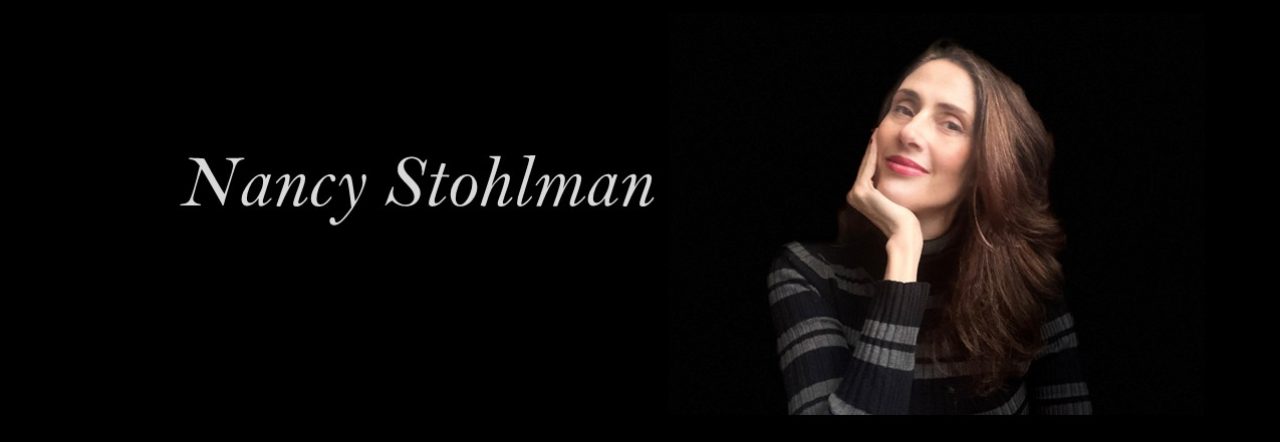
Nancy Stohlman
Ad Hic Fiction (2020)
ISBN: 9781912095797
Reviewed by Tammy Ruggles for Reader Views (01/2021)
“Going Short: An Invitation to Flash Fiction (Master Class Series)” by Nancy Stohlman, is an energetic, comprehensive guide that teaches writers how to write flash fiction.
Some readers like long, luxurious stories, while others like them short and sweet. Writers are no different. Some enjoy writing the long novel, while others enjoy the shorthand style of flash fiction. Some, of course, prefer to do both. If you’re a writer who’s never dabbled in flash fiction but wants to, or one who has but would like to take a deeper dive into the process and take your writing to the next level, then this book is all you really need. Stohlman takes you through the basics–what flash fiction is, what it isn’t, and what it could be when done well. Anyone can write a super short story. But does it still make an impact? Is it as entertaining and moving as if you’d written it long? This book will help you explore that and will give you hands-on instruction on how to make your flash fiction the best it can be.
We writers have all heard the advice “write tight” or “write lean.” But flash fiction is more than just being concise. It’s creating a meaningful story in a short amount of space–still satisfying. Still moving. It has nothing to do with short attention spans or a lack of time. It means you enjoy really short fiction, for its own sake.

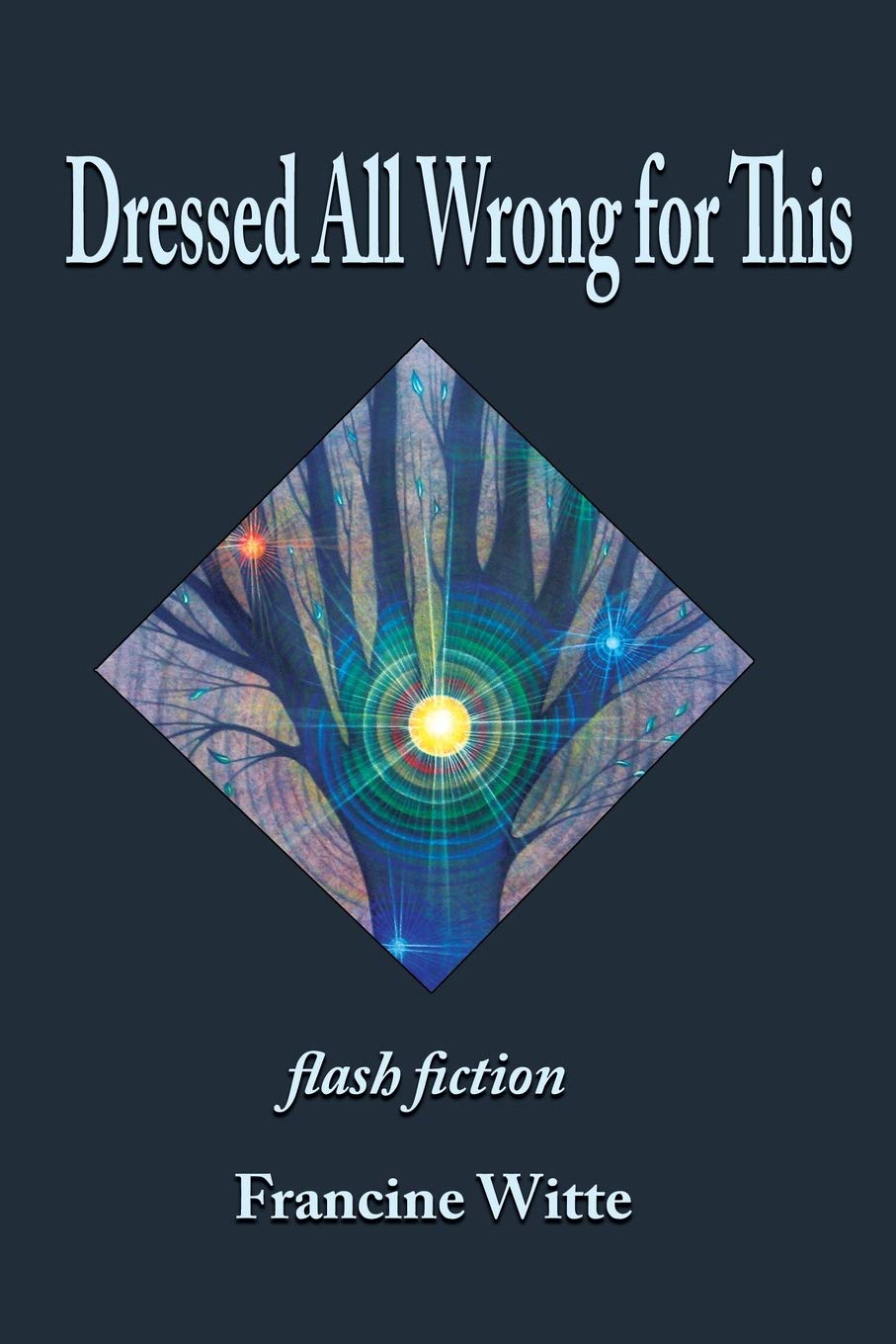
Dressed All Wrong For This, Francine Witte’s new book of flash fiction and winner of the Blue Light Fiction Award, is a smorgasbord of poignant absurdity, expertly navigating the delicate line between pure whimsy and subtle, sometimes devastating truth. This book will make you laugh at the same time it takes your breath away.

Nancy Stohlman: Your work is whimsical and absurd, almost slapstick at times, just the way I like it! Where do your ideas come from?
Francine Witte: I get my titles first, for the most part. A phrase might pop into my head and I go from there. The story usually unfolds as I am writing it. I rarely know what the story is going to be about until I start. Just letting myself go where the story takes me often allows for the absurd to happen.
NS: There are so many memorable moments in these stories. This one from the story “Flag” stood out for me:
The waiter brings the Coq Au Vin.
This is chicken, Janie says
I thought it would be something more.
You might also say that about love, the waiter smiles.
This passage is the perfect example of what I love about your work—just when you think it’s pure silly, you swiftly rip away the tablecloth to reveal the truth underneath. Talk about the relationship between absurdity and truth in general and in your writing.
FW: To me, when something is absurd, it’s because it’s true. So very often as I’m thinking of writing how people are getting along in a restaurant, in love, in just about anything, I’m also thinking, what’s really true here. What aren’t the characters saying? In the above passage, it seems absurd that a waiter would just randomly say what he says, but it’s also true.
NS: There are so many recurring themes in this book, including food, betrayal, and of course, chicken. Why chicken?
FW: Betrayal is my go-to theme. It has conflict baked in. I have lots of guys leaving lots of gals for no reason, or lots of reasons. Parents cheating on each other. Friends stealing each other’s boyfriends, and on and on. It never leaves me. As to food, it seems to be what people do. They eat. Anytime people are getting together there is food. And if there isn’t food now, there is food later. And I suppose that chicken is kind of an easy food to reference, being as ubiquitous as it is in our culture. Also, I think the word “chicken” is funny.
NS: We first shared pages in Tom Hazuka’s wonderful anthology Flash Fiction Funny. Do you think comedic writing is taken less seriously in the writing world?
FW: Humor in writing certainly has less gravitas, even though it’s much more difficult to do well. Maybe humor tends to be more topical, and therefore has a specific shelf life. I love humor and absurdity is like a quieter form of humor.
NS: Talk a little about your journey to flash fiction. Did it choose you?
FW: I started as a poet, and most of my formal writing education, my MFA, etc. is in poetry. I wrote and published poems in the late ‘80’s. Then in the early ‘90’s, I ventured into playwrighting, and wrote a few full-length plays and many, many one-acts. I liked the one-acts more because I love the compression of them. Also, I liked that there are more things you could do form-wise in a short play. That’s pretty much the same as flash fiction. I started to write short-shorts (as they were referred to then) and immediately fell in love with the language and possibility of such a short story. You can set a flash on the moon, for example. That doesn’t work as well in a longer story. I took a class with the great Roberta Allen, who was the only person teaching flash in the late ‘90’s (that I’m aware of.) I started sending my stories out, and got them accepted into the print journals. And that’s how the journey happened.
NS: You are widely published in both flash fiction and poetry. How do you navigate/separate between the two? Or do they bleed into one another?
FW: Flash fiction and poetry have similarities in their language, but for me that’s where it ends. I feel like they do very separate things. Poetry is a meditation. It doesn’t need a story, and if there is a story to the poem, that story’s purpose is the speaker examining a moment and how it helps the speaker learn something. Poetry has an inward movement. Flash fiction, on the other hand, is the unfolding of events that the narrator is living in that moment. The narrator is in a state of discovery as the story goes on. An outer movement.
I always know what I am going to be writing when I sit down and have never wondered if a flash fiction should be a poem or vice versa.
NS: Dressed All Wrong for This was the winner of 2019 Blue Light Book Award: congratulations! How important do you think awards are for writing careers?
FW: Thank you. For me, awards have been important as three of my chapbooks got published as part of a prize. Often, contests are the only avenue to book publication. It’s also nice to get the recognition. I don’t know how important it is to one’s career. I think it’s more of a nice thing than a necessary thing.
NS: What’s it been like to be a writer in New York City during the year 2020?
FW: There is such a vibrant writing scene in New York City. In fact, many writing scenes. Downtown, universities, etc. You could go to a reading every night. Sometimes two. So, the closure of these readings made a significant dent in the networking and socializing aspect. Also the promotion aspect was affected. People who had a book launch in 2020 were kind of screwed. But I don’t think these limitations are distinct to New York. I do shudder, however, to think what we would do without zoom. Online readings have enabled worldwide connections that would have been otherwise impossible. So, while we missed out on in-person readings, a whole other kind of reading, the online reading, was born. Talk about lemonade.
NS: Lemonade indeed! Advice to someone writing a book?
FW: I can only speak to books of flash and poetry. I would say to write and publish the pieces and let the book come together from that. I’ve never sat down to “write a book.” Rather, I put all my favorite poems or stories together. I would find a way for them to tell a story, because usually they did. I do have a novella, The Way of the Wind, but I wrote it as if I were writing flash stories that had a plot tying them together. Most important thing – every story or poem should be a 10 (at least to you.)
NS: “Every story should be a 10.” I love that because, yes, we do get attached to our darlings. Thank you so much for hanging out with me, Francine! Can you share some links to book and other promo links?
Dressed All Wrong for This on Amazon Dressed All Wrong for This: Witte, Francine: 9781421836393: Amazon.com: Books
The Way of the Wind on Kindle The Way of the Wind (Novella-in-Flash) – Kindle edition by Witte, Francine. Literature & Fiction Kindle eBooks @ Amazon.com.
Or in paperback Ad Hoc Fiction The Way of the Wind : Francine Witte [978-1-912095-93-3] – £9.99 : Ad Hoc Fiction, Short Short Fiction Press
Poetry books, Café Crazy and The Theory of Flesh available on Amazon
Flashboulevard.wordpress.com (a web journal of flash that I edit)
Follow her on twitter @francinewitte
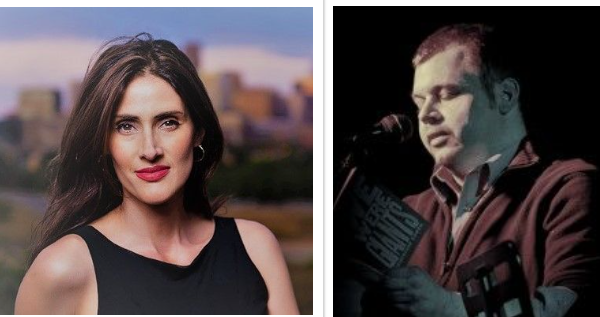
Francine Witte’s poetry and fiction have appeared in Smokelong Quarterly, Wigleaf, Mid-American Review, Passages North, and many others. Her latest books are Dressed All Wrong for This (Blue Light Press,) The Way of the Wind (AdHoc fiction,) and (The Theory of Flesh.) Her chapbook, The Cake, The Smoke, The Moon (flash fiction) will be published by ELJ September, 2021. She lives in NYC.

“Flash fiction is our David against the Goliath of literary tradition.”
Nancy Stohlman
What’s the hardest lesson you’ve learned from being an educator?
I love watching writers fall in love with form. The hardest part is trying to explain and champion the genre to outsiders who are often reticent or suspicious. I often get dismissive reactions, “readers-have-short-attention-spans” or “flash-isn’t-serious-literature.”
Flash fiction is our David against the Goliath of literary tradition.
How important is emotional maturity in writing good flash?
All the rules of good writing also apply to flash. Often I see emotional maturity manifesting as wisdom to know what the story wants from you vs. what you want from the story. Word constraint forces you to get really clear. We are midwives of the story and should be in service of the story–what I would call true creative maturity. This is also where poetry and flash fiction meet—the distillation process requires us to sometimes “write” hundreds of pages to accurately distill one small truth.
Writers compare their successes and failures to others’. How do you deal with other writers’ success and failure? What advice would you give a beginning writer who does such comparing?
I see others’ successes as inspiration for my own. But some days I can’t. For all of us there can be hard days, weeks, or seasons, and it’s okay to be gentle with yourself on hard days. Try to take the big-picture view and remember we’re all in different phases of creative process. For instance, I get to enjoy watching my book Going Short finally go into the world. But I’ve worked on it behind the scenes for seven years, and I’ve published very little in the last year. It’s a rhythm.
Christopher Bowen is the author of the chapbook We Were Giants, the novella When I Return to You, I Will Be Unfed, and the non-fiction Debt. He was a semi-finalist in the 2017 Faulkner-Wisdom Novella Competition and honorable mention in the 45th New Millennium Writing Awards in the non-fiction category. He blogs from Burning River.
 Nancy Stohlman