
Only Two Weeks Away!

Are you in??
FlashNano Year 8!
More info coming so stay tuned!
FlashNano Year 8!
More info coming so stay tuned!
Charmaine Wilkerson’s prize winning novella-in-flash, How to Make a Window Snake, is a spinning constellation that orbits one family’s grief, circling around and around what cannot be said…or forgotten. Her narrative is crisp, dense and deep–the entire iceberg under the water. Paired with the two runners-up for the Bath Novella-in-Flash award, A Safer Way to Fall by Joanna Campbell, and Things I Dream About When I’m Not Sleeping by Ingrid Jendrzejewski, How to Make a Window Snake is a trifeca of a book and an incredible showcase of the form.
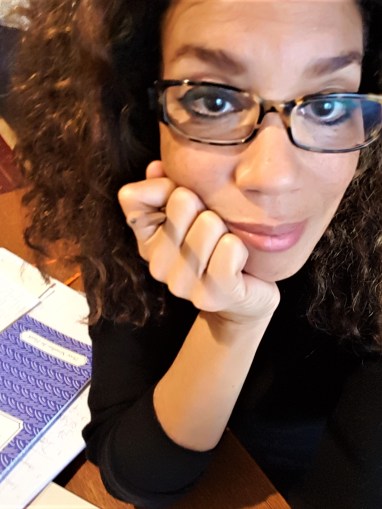
Nancy Stohlman: In the spirit of flash fiction, describe this story in 6 words.
Charmaine Wilkerson: Loving family. Menacing lake. Fake snake.
NS: Talk about the novella in flash form. How do you see it as different than, say a flash novel? Or not?
CW: The magical thing about the novella-in-flash is that each chapter can be read like a stand-alone piece of flash fiction, even though the parts add up to a larger story. By contrast, I tend to think that a flash novel can be more loosely structured, especially if it runs two or three hundred pages, as long as the chapters are short and pack the same sensory or emotional punch that I expect from a piece of flash fiction. Your own Monster Opera does that. And, in my mind, the term flash novel could be applied to books like George Saunders’ Lincoln in the Bardo or Mark Haddon’s The Curious Incident of the Dog in the Night-Time
NS: I absolutely agree (and thank you!) Was this story being written already or did it happen as a result of the form? Chicken or Egg? Have you tried to tell this story in other ways?
CW: Chicken, definitely. Actually, this story was more like a bunch of baby chicks, fuzzy little mini stories, dashing back and forth across the same dirt yard, pecking at different themes here and there, until one day, a mother hen waddled over and said, Hey, you chicks, you’re all part of my brood, so get on over here! I didn’t try to tell this story in any other way, though I did write other flashes in this series that were not included in the novella.
NS: My very favorite thing about this story is your use of repetition—each story stands alone but echoes the previous stories—circular rather than linear. But the repetition feels necessary, not superfluous. Talk about that choice.
CW: Thank you. Finally, someone who doesn’t complain when I repeat myself! Seriously, I do tend to come back to certain words or phrases or rhythms when I write, though not always. In this novella, the repetition emerged naturally but I took time to sharpen the pattern during the final editing stages. I saw this as a way to strengthen the connections between the chapters, since the narrative goes back and forth in time and skips from one character’s point of view to the next.
NS: I find it interesting that the family in this story is circling around their own griefs—what do you think the story/form says about grief?
CW: One aspect of the human experience that continues to intrigue me is how, despite the power which grief has to alter us, we may still be able to love and play and have meaningful and satsifying lives. I found that writing about these different characters in short passages made it easier to mix these dimensions and, also, introduce other issues which they were facing.
NS: Are there other books whose form inspired you as you were creating this?
CW: One book I can recall going back to while writing this story was My Very End of the Universe, an anthology put out by Rose Metal Press with stories by five masters of the form. The authors’ accompanying essays held great resonance for me, especially Meg Pokrass’s discussion of creating a narrative from “scraps” and Aaron Teel’s discussion of “mimicking memory” through flash fiction. It felt as though these two essays were speaking to what I was writing that year.
NS: How to Make a Window Snake won the first Bath Novella-in-Flash award and was published in one book with the runners up, A Safer Way to Fall by Joanna Campbell and Things I Dream About When I’m Not Sleeping by Ingrid Jendrzejewski. How do you see these novellas playing off of each other?
CW: I am immensely grateful to the Bath Flash Fiction group and Ad Hoc Fiction for embracing this form of expression. It was very exciting to see such different stories selected by one judge, Meg Pokrass, and published together. The language used from cover to cover ranges from chatty to poetic to surreal. What I think these novellas-in-flash have in common is an intense gaze, heightened by details that leave a trail of emotion in their wake.
NS: I found it extremely unusual that none of your stories were published before the manuscript was submitted. How wonderfully risky! Your thoughts around publishing excerpts vs saving it all?
CW: The decision to share excerpts beforehand should be determined by the individual writer, based on their objectives and how those aims fit with the requirements of the magazines and book publishers on their wish list. In my case, not publishing individual flashes wasn’t really a risky move because they were all such new stories, anyway. I did submit a couple of the flashes to other outlets but soon received word that I had won the Bath competition, so that was that.
NS: What is your best advice to someone who is writing/wants to write a book?
CW: When I write fiction, I don’t think of it as a book. I think of it, first and always, as a story, or just an idea that needs to be captured. And I don’t always write what I’m thinking. I might take a snapshot or record natural sound on my mobile phone. I have a lot of recordings of water—the sea, a lake, a brook. The sound helps me to see things. Someone else might prefer to sit down and plot out everything ahead of time. What’s important is that you allow yourself to do whatever works for you in the drafting stages of a story, whatever helps you slip into that creative stream.
NS: Thank you for playing, Charmaine!
To buy How to Make a Window Snake: https://bookshop.adhocfiction.com/index.php?main_page=product_info&cPath=65&products_id=182

Charmaine Wilkerson lives in Rome, Italy. Her stories and essays have appeared in various anthologies and magazines, including Best Microfiction 2019, 100 Word Story, The Common, New Flash Fiction Review, FlashBack Fiction, Fiction Southeast, Bending Genres, Reflex Fiction and Spelk. Her novella How to Make a Window Snake won the Bath Novella-in-Flash Award in 2017 and the UK’s Saboteur Award for Best Novella in 2018.


The Best Small Fictions anthology, now in its fifth year, presents one hundred and forty-six pristinely crafted pieces from an array of authors representing twenty-six nations and six continents. These short, elliptical works are varied and edgy, sorrowful and triumphant, provocative and visionary. The small fictions enclosed within this volume are always vibrant. They scintillate. They linger. With each story brief enough to savor at a stoplight or quick coffee break, the tales contained within 2019’s The Best Small Fictions promise to leave a mark.
Guest Editor: Rilla Askew
Series Editor: Nathan Leslie
Publication Date: 11/05/2019
$29.95
Or Order From:
“Consistently the best of the annual award volumes in the genre – and this year is the most boundless, reaping “national flash fiction days” across the globe and across time, from small historical fictions to an Akutagawa classic to experiments with every form. A who’s who of authors, presses, and journals, Best Small Fictions is the one book you should buy in the genre this year if you could buy only one.” – Robert Shapard, co-editor of Flash Fiction International
“This is an excellent selection of flash fiction from expert practitioners at the top of their game.The works selected here demonstrate the power of this extremely short form, each tiny piece of text leaving an imprint on the reader much bigger than its original size. At times they appear to work together with the others, forming a single constellation of beauty and stillness.” – David Gaffney, author of All the Places I’ve Ever Lived and Sawn-Off Tales
“Brilliant, incendiary, incandescent, these tiny stories capture worlds both intimate and universal. Give this book to anyone who says flash fiction doesn’t go deep. This newest volume of Best Small Fictions demonstrates once and for all that flash fiction writers are the Ginger Rogers of the literary world, accomplishing all that novelists and short story writers do, only backwards and in high heels.” – Kathy Fish, author of Wild Life: Collected Works
“An outstanding collection. From a newly translated piece by Akatugawa, to my mind one of the greatest story writers of all time, to current favorites like Carmen Machado and Jacob Appel and many others I needed to know and now do this book has remarkable range. And is proof, if we needed it, that the more compact the force, the more powerful the blow.” – Peter Orner, author of Maggie Brown & Others

In Vanessa Gebbie’s new chapbook, Nothing to Worry About, the body really is a wonderland! Gebbie’s brand of surrealism hinges on bizarre manifestations of the physical body—a wife turns to metal; a wife is dropping “pieces” of herself all around the house; a wife’s body becomes a flock of birds with her heart at the center. It’s deceptively light-hearted but hints at deeper metaphors around identity—are we our bodies? Or are they just fleshy appendages with their own agendas? Gebbie manages to get at the heart of this paradox with a wry little smirk on her face.
Nancy Stohlman: In the spirit of flash fiction, describe this book in 6 words.
Vanessa Gebbie: Fun, off the wall, slightly worrying…
NS: I love your weird sensibility. Did you always write weird or was this an evolution?
VG: Not an evolution but just a way of seeing things. I always see life sideways, I’m lucky like that. However, I’d not let myself collect together the stories that came out sideways, believing that maybe a ‘serious’ writer wasn’t meant to be funny. Now, I’m a bit wiser. Funny is often a stage on the road to understanding sadness.
NS: Humor is touchy. Is British humor different than American humor?
VG: Well, I don’t know… I used to watch Friends with my son and wonder what the hell was funny when he and the audience were falling about. Quite often comic situations either side of the pond are at someone’s expense, aren’t they? Example: The clown trips over her shoes, treads on one end of a plank and gets hit on the nose by the other end. I never understood why that was funny, either. But ordinary life… its twists and turns, misunderstandings and non sequiturs … can be unintentionally hilarious. I think it’s when people try too hard to be funny that it isn’t. Or they aren’t. (eyes to heaven intentional!)
NS: What makes weird work and when does it not work?
VG: I don’t know the answer to that. All I know is, if a weird situation makes sense for that character, within that story, then that’s fine. It’s the joy of flash, or one of them, for this writer. Flash can sustain irreality neatly, whereas a longer story might labour the point too much. Is that it?
NS: Who is your favorite weird writer?
VG: Golly, loads of fantastic writers write marvellously strange worlds, don’t they. Adam Marek comes to mind… but also, I’ve just read a marvellous flash by Tania Hershman on Smokelong. Her portrayal of human interactions, with their marvellous fractured patterns and frequent blind alleys, are a kaleidoscope of images and half-sense meanings. The effect is that the reader gets what’s happening without ever having anything spelled out. Which makes me ask what is ‘weird’ anyway? Isn’t it just ‘normal’ seen through a prism?
NS: “The Door” is one of my favorite pieces in this book, and I read that it was written for and performed at Stand Up Tragedy at the Leicester Square Theater in London. Performed by you or others? How do you see the intersection of writing and performance?
VG: “The Door” was a commission, and just for one performer: me. I’d never thought of myself as a performer, and still don’t – the word conjures up performing sea-lions rewarded with fish. But I guess, when I write anything, , I ‘hear’ a piece in my head, and always always listen to it read out loud when I think it’s finished. It never is. Reading out loud to myself is an integral part of the editing process, so maybe reading it out loud for an audience isn’t that far removed? Is that the intersection? If it sounds OK to me, maybe it will sound OK to others.
NS: Speaking of performance, I’ve seen you read your work before, and you are quite hilarious. I especially remember hearing you read “Selected Advice for Strangers.” Does reading your work to an audience come naturally? Where did you get so funny?
VG: It is nice to make people happy. No idea where being funny came from, unless it’s a necessary balance to being serious? Mind you, I used to read stories to my school friends a long while back, and make them either squirm with my horror stories, or giggle… I prefer the laughter.
NS: This is not your first book—you also have several books of fiction including the collections A Short History of Synchronised Breathing, Ed’s Wife and Other Creatures, Words from a Glass Bubble, and the highly praised novel, The Coward’s Tale. How does Nothing to Worry About build on your previous works?
VG: It’s my 9th or 10th depending if you count different editions as two. I’ve just finished the first messy draft of 11 (or 10), another novel. Nothing to Worry About collects together strange, irreal, often funny pieces. It came out at the same time, or nearly, as a collection of longer short stories, all equally weird. Funny but with more than a grain of truth behind the laughs.
NS: Nothing to Worry About is published by Flash: The International Short Story Press. Can you talk about your road to publication?
VG: Sure… my road to publication began back in 2002 when I decided to write. I always had, as a young person at school and college, then stopped. So it was time to kick start creativity again. I wasn’t young.
I concentrated on short form fiction, despite teachers at university telling me that I was better off writing a novel. I didn’t feel I had all that time to waste… and short forms were so much more satisfying, doable, yet challenging.
My first book was a collection of prizewinning short stories. Words from a Glass Bubble (Salt) came out in 2008. It was followed by a text book on the art of the short story , for which I was commissioning and contributing editor. Since then it’s been a book a year. I’m lucky, I write across boundaries- so have three short story collections, two flash collections, two poetry collections, two editions of that text book, and a novel. I’ve just completed a first draft of novel number two, the first work that is not based on shorter fiction forms. It will take a lot of editing, but it’s been fun. A great mix of humour and violence.
NS: In addition to your many books of fiction, you’ve also written several editions of a book on the craft of writing, Short Circuit: A Guide to the Art of the Short Story. The first edition of that book came out 10 years ago, in 2009. How has the form changed since you first started writing and teaching it?
VG: Interesting things have been happening… I think boundaries are breaking down, definitions are loosening. Hybrid works, fascinating works of art comprising prose, poem, dramatised scenes, non fiction, anything… exciting times. The rise of performance opportunities too… short forms are perfect for that.
NS: What is your best advice to someone who is writing/wants to write a book?
VG: You want to write a book? First ask yourself why. Be honest. There is a difference between ‘I want to be a writer’ and ‘I want to write’. We’ve all met the ‘want to be a writer’ types. They dress the part, usually in black, always look ill, and talk endlessly about writing, but what else?? Do they actually do it? Probably not. Avoid! The writers I know don’t look like “writers”.
So you really want to write? Good for you. Then read. Read more. And more. And write. Write more. Learn as much as you can, try everything, let yourself make mistakes. Seek the company of, and feedback from others who understand what you’re trying to do. Offer them your honest feedback too.
NS: Anything else you want to add?
VG: Enjoy the ride. Keep reading.
Never think you’ve learned it all. You never will.
And if you want to buy my book, please support publishers or independent bookshops.
To buy Nothing to Worry About from the publisher:

 Nancy Stohlman