Why Self-Promotion Isn’t Really Shameless

I first wrote this article a few years ago, but every year, when I hear a writer preface a moment of celebration with “here comes some shameless self-promotion, but…” I realize it’s time to pull it back out.

Self-Promotion or Self-Prostitution?

Do you hate the idea of self-promotion? Do you tell yourself that you’re not good at it? That you shouldn’t have to do it? Do you apologize every time you do it? If you hate self-promotion, or even the prospect of self-promotion, you’re not alone. We all want to be left alone with our writing and let someone else handle the promotion part. And no matter the genre, all artists seem to share a similar aversion. Most of us are still waiting for an agent/manager/publicist to come and rescue us from the prospect of having to promote…ourselves?

But why?

As artists, we’ve internalized certain agreed-upon stories, certain cultural mythologies that may be blocking our ability to put ourselves and our work out into the world. But the catch is if we want to be taken seriously, we have to start playing seriously. And since most of us agree that self-promotion is necessary, it’s worth taking a look at these stories and deciding whether perpetuating them is serving our art and our careers—or not.

1. The Starving Artist Story: “I’m not going to make any money at this, anyway.”

If we were running a company, a large portion of our budget would go to marketing, right? If we were selling shoes, our livelihood would depend on us getting out there and selling some shoes. Even if we were running a lemonade stand, we would understand that, in order to sell lemonade, we would need to make signs or hire neighborhood kids with megaphones to let people know that lemonade is available. If no one knows about our lemonade, then no one will buy it no matter how fantastic it might be.

344fd9_7836423a9e2c4316a817bed1234e9ff7
But when it comes to our art, we’ve subscribed to a “starving artist” story that tells us that we’re probably not going to make any money at this, anyway, so we don’t take the task of promotion seriously. In fact, most of us would probably do a better job promoting the lemonade than we would the art that we have poured our blood and souls into.
It’s crucial to realize that if you want to make a career out of your art, then you have gone into businesswith yourself. My product is my work. If no one knows about my product, they can’t buy it. And then I’m out of business.

Many of us don’t promote because we would rather fail privately than publicly. We fear rejection and ridicule; we retreat into craft instead. But as long as we are stoking the starving artist story, then we’re going into the game already defeated. If we believe we cannot make a living out of our art…then we probably won’t.

2. The Overnight Success Story:“Once I’m famous someone else will do this.”
This is the mythical story of the artist who is catapulted into fame from obscurity with little effort of their own. While this mythology is exciting, and the media loves to dangle it as some warped version of the American Dream, it’s also a bit like expecting to win the Powerball.

This overnight success story is a darling of artists and runs deep in our culture. But if you look carefully behind most successes, you will usually find a different story. Madonna made hundreds of demos with her own money and personally brought them to every DJ in New York City; Truman Capote sat for 8 hours a day in the lobby of the publisher who refused to see him. Even Rosa Parks, our favorite “little old lady” who wouldn’t give up her seat on the bus and thus triggered the Civil Rights Movement, was actually a veteran activist for 15 years when she was finally in the right place at the right time.

Because that’s what it comes down to: “It’s not enough to be at the right place at the right time—you have to be the right person at the right place at the right time,” says musical agent Justin Sudds in his interview for “Take Your Talent to the Bank.” The truth of the overnight success story is that it is usually not overnight at all.

But what’s most problematic about this story is that it’s disempowering because it takes the responsibility for our careers out of our hands. Our careers become like playing roulette, and we feel powerless to affect real change. And I like playing roulette, but only with what I am prepared to lose.

3. “It’s Not Polite to Brag”

This is the story that really paralyzes us.

Here’s the truth: Will some people be annoyed by your promotional efforts? Yes. But usually the ones who are annoyed, offended, or otherwise triggered by your efforts are the ones who have not embraced their own. So their support or non-support for you and your work really has little to do with you and more to do with them. It’s pretty hard to jump on someone else’s bandwagon when your own bandwagon isn’t moving. It’s pretty hard to muster up enthusiasm for someone else when you haven’t really put your own work out there. So when you encounter this kind of resistance: be kind.

But they are in the minority. Most of the people won’t care, and in fact they will be happy that you’ve made it so easy for them. It’s said that a person needs to hear something five times (yes, five!) before they take action, and in our busy world most people are happy for the reminders.

So bottom line: self-promotion is not bragging. It’s asking for the support we need to create the artistic lives we want.

In this Puritan society we are told that “it’s better to give than receive,” so we give, we give, we give…but most of us have a hard time receiving. And most of us have an even harder time asking for what we want. If I want people to read my work—I have to ask. If I want people to come to my website, my lecture, or buy my latest book—I have to ask. You can’t fault people if you haven’t even asked them.

In our everyone-for-himself society we’ve attached a stigma to asking for help. But we also have to remember that artists must exist in community, and you have to put yourself out there with honesty and authenticity. Self-promotion is about asking for the support we need and building relationships with those who are excited about us and our work. It’s the greatest thing you can do for the promotion of art outside of creating the art itself.

And yes, it’s true that Emily Dickinson did no promotion. But then again, she never got to enjoy the rewards, respect, or recognition of her work while she was alive.
I want more for myself and my art.
And I want more for you, too.

xoxoo
N

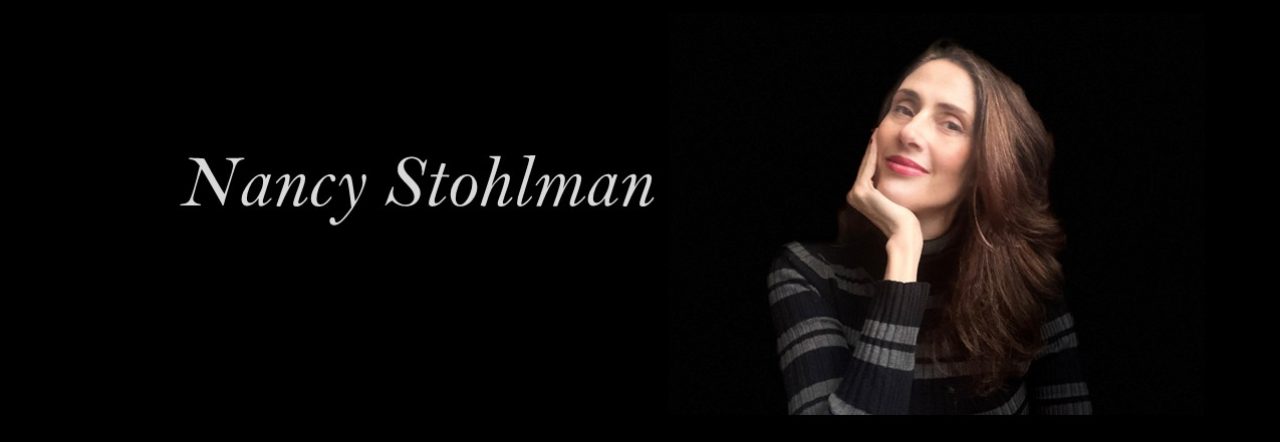
Nancy Stohlman Bath Flash Fiction Award Judge July 2019 – October 2019

Flash Fiction Award: Deadline midnight GMT October 13

bathflash

What is flash fiction? Read the full interview with our judge Nancy Stohlman  Runs three times per year, full details in the rules. In summary:

  • 300 word limit.
  • £1000 prize for the winner, £300 second and £100 third. Two commendations £30 each.
  • 50 longlisted entrants offered publication in our end of year print and digital anthology. Those accepting receive a free copy.
  • Flash Award judge, Nancy Stohlman, shortlists to 20 and chooses the winning, second, third, and two commended fictions.
  • This Flash Fiction Award round closes Midnight GMT October 13th 2019.
  • Winners will be announced by 1st November 2019 on our Winners pages.
  • Enter the Flash Fiction Award here online.

Nancy Stohlman Flash Fiction Award Judge July 2019 – October 2019

(Interview Excerpt)

We sent Nancy these questions while she was at the end of her writing sabbatical. And since then we’ve seen her at the Flash Fiction Festival, 28-30 June, in Bristol, teaching and performing her flash. She ran some great workshops on performing work and we got to hear her read and saw her in a special video created by our last judge Christopher Allen and his husband. So much fun!

You have recently been on a writing sabbatical for three weeks. Can you let us know how it went? What was the most worthwhile thing about deciding to take some time out in this way? And has the time resulted in another collection ready to go?

It was amazing (actually I’m in my final days right now). First of all I can’t remember being alone for 3 weeks—maybe ever. Really alone. So I went through a lot of creative levels—excitement, possibility, self-doubt, fear, breakdown, breakthrough, acceptance, and lots and lots of gratitude. I think my biggest discovery is how essential boredom is to creativity. I just wrote a whole essay about Holy Boredom here

But staying in the same place for a long time is different than the usual travel, where we are rushing past things and quickly taking pictures, barely skimming the surface. I recognize the townspeople now, they recognize me. We wave like friends passing on the street. I can spot the new crop of tourists, fleshy and pink and overeager. I’ve been here so long I know who the town crazies are, know that they are harmless. The waiter asks: how is your book, you find inspiration yet? Just today he brought me my coffee exactly how I like it before I even ordered. When I needed a new snorkel the shopkeeper takes it out of the wrapping—you pay me tomorrow he says.
Are you sure?
Did you come here to steal? You pay me tomorrow.
It feels like acceptance.

New manuscript? Let’s hope so…I’m leaving with a nearly completed draft of…something. Time will tell.

  • Can you tell us more about your collection Madam Velvet’s Cabaret of Oddities (which was recently a finalist in the literary section of the prestigious Colorado Book Award) and how it came about?

Yes, another crazy impulse that turned into something. As usual I didn’t set out to write a book, I just started writing the pieces as individuals and then collaging them and then realized that indeed I was writing a bigger story. Many of the pieces in Madam Velvet are my shortest ever—tiny stories, micros. And they started to play together and create a cabaret of their own, a variety show with an impulse running from beginning to end. A traveling freak show on the page.

I often use theatrics as a framework for my writing. I wrote another flash novel (published back in 2013) called The Monster Opera, where the story was an opera within an opera. Super weird. I’ve actually performed both Madam Velvet’s Cabaret of Oddities and The Monster Opera as full shows with full casts and original music composed by Nick Busheff. You can see clips from both these on the links.

And the Colorado Book Award—yes! I was especially excited because of course there was no flash fiction category so I submitted the book as a short story collection, which isn’t exactly right but close enough. Then I was told that all the short story entries were going to be combined with literary fiction and I thought: Well shit. Now I have no chance! So to have this book, this very strange, out-of-the-box book, be a finalist in literary fiction, was a double and triple win for me and I feel for flash fiction in general.

Continue reading interview here

Enter the flash fiction contest here:

So You Wrote a Book? Jayne Martin

Kicking off Season 2 of So You Wrote a Book? is the one and only Jayne Martin and her debut flash fiction collection, Tender Cuts!

From my blurb: “Tender Cuts is about seeing and not seeing, what we are blind to and what’s right in front of us. In this debut flash fiction collection Jayne Martin’s writing is compact, dense, often heartbreaking, always illuminating, and woven with a strange nostalgia; she has a way of reconciling the child with the adult, the pain with the beauty of tragedy, the tragedy still seeded with hope.”

I’m so excited to welcome Jayne Martin!

perf8.000x8.000.indd

Nancy Stohlman: Describe this book in 6 words:

Jayne Martin: Tiny tales for the time challenged.

NS: This is your first book of flash fiction but not your first book—you also have a book of humor essays, “Suitable for Giving: A Collection of Wit with A Side of Wry.” Talk about how you have changed as a writer from that first book to Tender Cuts.

JM: All that’s changed really is my focus. I still enjoy writing humor, though little of it finds its way into my flash. In the humor essays, I reveal much more of myself, while the stories in “Tender Cuts” are 100% fiction. I’m probably a much better writer, but you do this stuff long enough you can’t help but get better and I’m into my fourth decade now. In “Suitable for Giving,” I could be self-indulgent. Flash has got to be tight. Get in, get out, and keep it moving. I have a keener eye for edits now and much less resistance to “killing my darlings.”

NS: Your stories are accompanied by illustrations by Janice Whitby and Indigo Roth. The style of the illustrations almost seem like doodles, the kind you would find carved into desks or doodled onto notebook paper. What was your vision for including images with your stories?

JM: There are so many collections out there. It’s hard to make yours stand out. I wanted to give the readers another way to experience the story. The drawing for the title story is a heart with a crack and a bandage over it. The heart motif continues throughout to reinforce the theme of cuts or wounds that the characters experience. The “doodle” style was chosen to add a bit of whimsy because many of the stories are quite dark.

NS: Julie Sue is a reoccurring character in this book. She first shows up as a young “pageant princess” and by the end of the book she is a mother with her own daughter. Where did the character of Julie Sue come from?

JM: Julie-Sue originated in your November 2016 Flash Nano from the prompt “winning a prize.” It went on to be published in MoonPark Review’s first issue. When I was assembling the collection, I knew I needed a spine to hold it together, so I wrote the three additional Julie-Sue stories, which have not been seen until now. Once I had those, I had a structure for the book. And I owe it all to you.  😊

NS: Awww, you are too kind, Jayne! I’m thrilled to be part of your process. Now your stories tend to be really short. Always or is short a continuing evolution?

JM: Miniatures appeal to me. Micro has a lot in common with bonsai. Having said that, unless I’m writing for a particular word-count guideline, it’s rarely my intention to write so short. Most of the time the story just ends and I’m as surprised as anyone else. Occasionally, the Cosmos will bless me with a sentence that blows me away. At that point, I say, “Well, it ain’t gonna get better than that.” But mostly, when it’s done it’s done.

NS: You used to write for television (your credits include “Big Spender” for Animal Planet and “A Child Too Many,” “Cradle of Conspiracy” and “Deceived By Trust” for Lifetime.) How has television writing helped you as a flash writer (or not)?

JM: It’s helped enormously. Movies for network television, even more so than big-screen, are regimentally structured to fit a 93-minute time slot. Each has seven acts to accommodate six commercial breaks, and each act has a defined number of scenes. As in flash, the writer must enter the scene late, move the story along and leave before it’s resolved. This is especially true of act breaks where the audience has the power of the remote so you better leave them wanting more.

NS: Love the absurdity in your story “Lobster in a Laundromat”—it’s simple but brings up a deeper truth of how we all want to be desired and “seen”, even by a lobster and even in my blurb I say your book is about the many ways we are seen. Talk about this theme in your writing? Is in intentional or unconscious?

JM: Thank you. “Lobster” came out of a Meg Pokrass workshop on writing the surreal. Most of my stories sway heavily toward realism and I wanted to stretch. As soon as I had the first line, I had the story. It was a fun write. I’d say the theme you mention is more unconscious than intentional, but then I never know what a story is going to be until it’s written. I try not to overthink the process, because my best works have always been happy accidents.

NS: You won the Vera Prize for “When the Bough Breaks,” which appears in Tender Cuts, and you have also won or been nominated for various other prizes. How important do you think contests are for a flash writing career?

JM: Receiving an award or a nomination is a lovely thing. In an industry that most often rejects us, it’s a wonderful validation, a boost of encouragement. As to importance in terms of a career, I don’t really know. It looks nice on my bio, but I don’t think any journal has ever published me just because I won a Vera. Every day is a new blank page. Every day you’re Sisyphus at the bottom of the damn hill and you have to prove yourself all over again. Maybe it matters more when one is looking back over their accomplishments at the end of a career.

NS: Tender Cuts is published by Vine Leaves Press. Can you talk about your pathway to publication?

JM: I’m a big believer in the power of intent and its ability to bring about the means to achieve a goal once that goal is clearly defined and infused with energy. You can’t just say you want something and then sit on your ass and do nothing. The Universe rewards action. With that in mind, my clear intent was to find a publisher and failing to find one was never a consideration. I’m a Taurus. What can I say?

I started by approaching publishers who had published other collections by writers I admire.  I also utilized Poets & Writers database, combing through site after site. I’d gotten several of my blurbs already and I included those with my query letters. I think all together I submitted to six publishers. Vine Leaves Press used to publish Vine Leaves Journal, which solicited what they called “vignettes” and I call micro-fiction. I got an offer from them in three weeks and I could not have found a more perfect fit for the book. They’re a dream to work with.

NS: Your best advice to someone writing a book?

JM: I didn’t set out to write a book. The 38 stories in “Tender Cuts” were gleaned from a folder of stories going back to 2010. In 2017, I finally saw a through line in terms of a theme and the collection began to take form. In terms of setting out to write a book, I can only draw on my experience writing screenplays. You need a story compelling enough to drag you along because the time commitment is huge. Something you have to write because you can’t shake the damn thing any other way. I can only imagine it’s that way for a book, as well.

NS: Anything else you want to add?

I often hear the flash community express frustration about the lack of attention from the larger publishing world: “When are they going to notice us?”

We flash writers tend to be an insular bunch.  Sometimes it seems like we’re writing more for each other than to entertain an audience. We all submit to and read the same journals and buy each other’s books, but few “civilians,” those non-writing folks who just want to escape into a good story, have heard of any of those journals or any of us.

That brings us back to the aforementioned description of my book in six words: Tiny tales for the time challenged. I’ve heard it said that it’s insulting to the genre to describe it that way. I disagree. Having put the sweat into writing the book, now I’d actually like to sell a few copies, and recognizing that people experience a constant demand for their finite amount of time is part of that effort. So is writing stories that don’t require an MFA to understand.

Getting the attention of the larger publishing world may just be a matter of inviting them into ours.

Jayne Martin lives in Santa Barbara, California, where she rides horses and drinks copious amounts of fine wines, though not at the same time. She is a Pushcart, Best Small Fictions, and Best Microfictions nominee, and a recipient of Vestal Review’s VERA award. Her flash fiction collection, “Tender Cuts,” from Vine Leaves Press, is available now by visiting her website: www.jaynemartin-writer.com.

Preorders are available now from Amazon U.S. & U.K, Barnes & Noble, and Powell’s. Links on Jayne’s spiffy new website!

AS4A6066 - Copy

Jayne Martin lives in Santa Barbara, California, where she rides horses and drinks copious amounts of fine wines, though not at the same time. She is a Pushcart, Best Small Fictions, and Best Microfictions nominee, and a recipient of Vestal Review’s VERA award. Her flash fiction collection, “Tender Cuts,” from Vine Leaves Press, is available now by visiting her website:

www.jaynemartin-writer.com.

Friday, Oct 4: Fbomb NYC!

69539572_10217678147324029_8507273922004123648_o
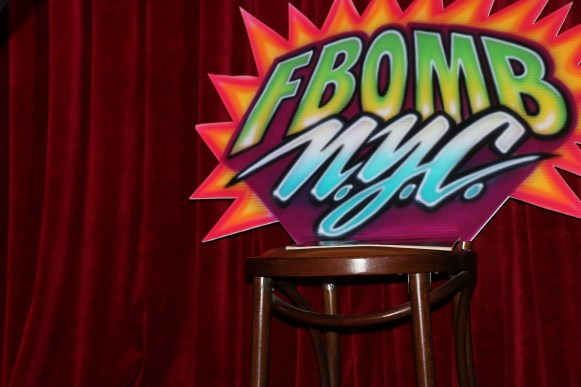
It’s been 3 years since I visited our sister Fbomb in NYC–I’m excited to return on Friday, October 4,  with an all-star crew of flash fiction writers and their new books, including:

Kim Chinquee

Gabino Iglesias

Jonathan Montgomery

Kenning Jean-Paul García

Francine Witte

Leonora Desar

Randall Brown

Beth Gilstrap-Barnes

with musical guest Nick Busheff

and host with the most Paul Beckman!

It’s going to be a great evening of flash fiction! Come be dazzled, get signed books from the performers, and see what all the hype is about. Would love to see you there! xoxo

Friday, October 4

6:30-9:30

KGB Bar and Lit Mag

85 E 4th St

New York, New York 10003

Facebook Event here